


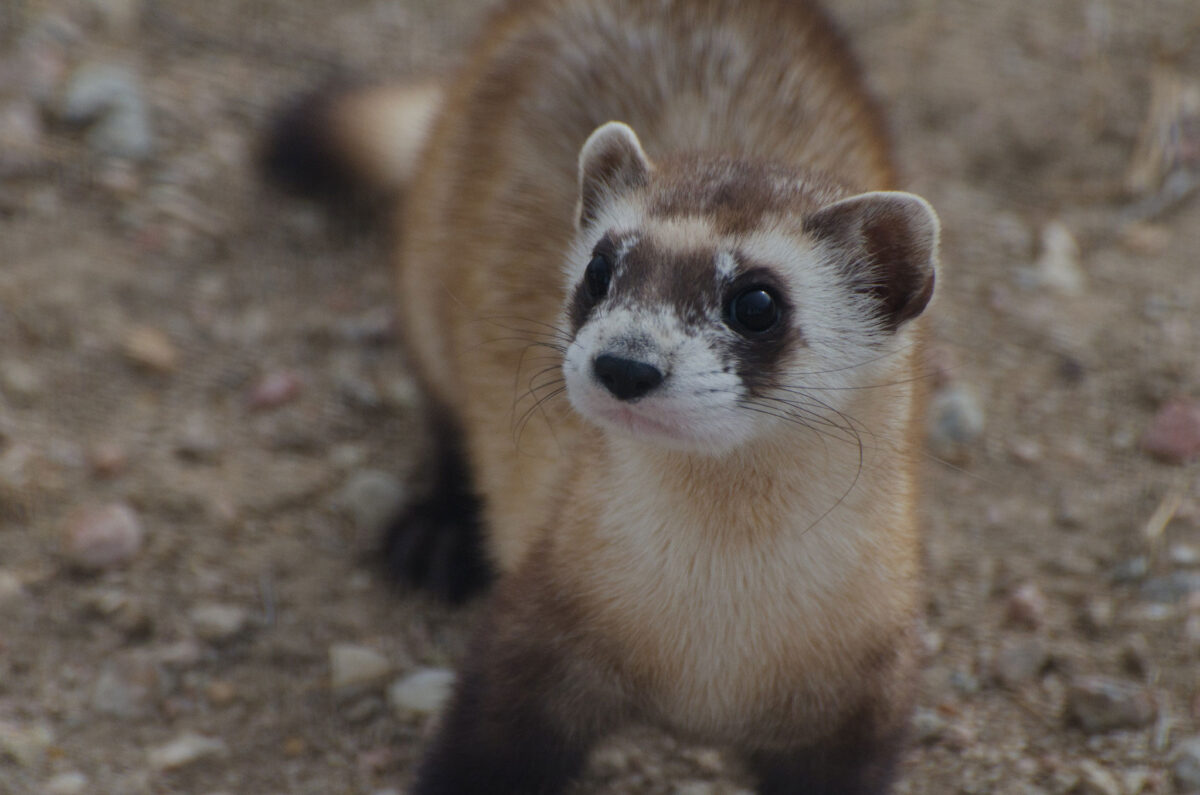
Page snapshot: An overview of the black-footed ferret, including what it is, why it is imperiled, what it is being done to help it recover.
Topics covered on this page: What is the black-footed ferret and why is it imperiled?; What is being done to conserve the black-footed ferret?; What are the barriers to black-footed ferret recovery?; How are institutions in Albuquerque helping the black-footed ferret?; Resources.
Credits: Funded by the National Science Foundation. Any opinions, findings, and conclusions or recommendations expressed in this material are those of the author(s) and do not necessarily reflect the views of the National Science Foundation. Page by Elizabeth J. Hermsen (2024).
Updates: Page last updated May 7, 2024.
Image above: A black-footed ferret, National Black-footed Ferret Conservation Center, Colorado, USA, 2012. Photo by Kimberly Tamkun/USFWS (USFWS Mountain-Prairie, Creative Commons Attribution 2.0 Generic license).
What is the black-footed ferret and why is it imperiled?
The black-footed ferret (Mustela nigripes) is a type of mustelid native to western North America. Mustelids are a group of carnivorous (meat-eating) mammals that includes minks, weasels, skunks, wolverines, and other related animals. The black-footed ferret was once very common in the western US, thought to number in the hundreds of thousands, or even up to a million, animals in the 1800s. It once ranged from Montana and North Dakota in the north to Arizona, New Mexico, and Texas in the south. Black-footed ferrets were also found in southern Saskatchewan and maybe Alberta, Canada, as well as in northernmost Mexico near the US-Mexico border.
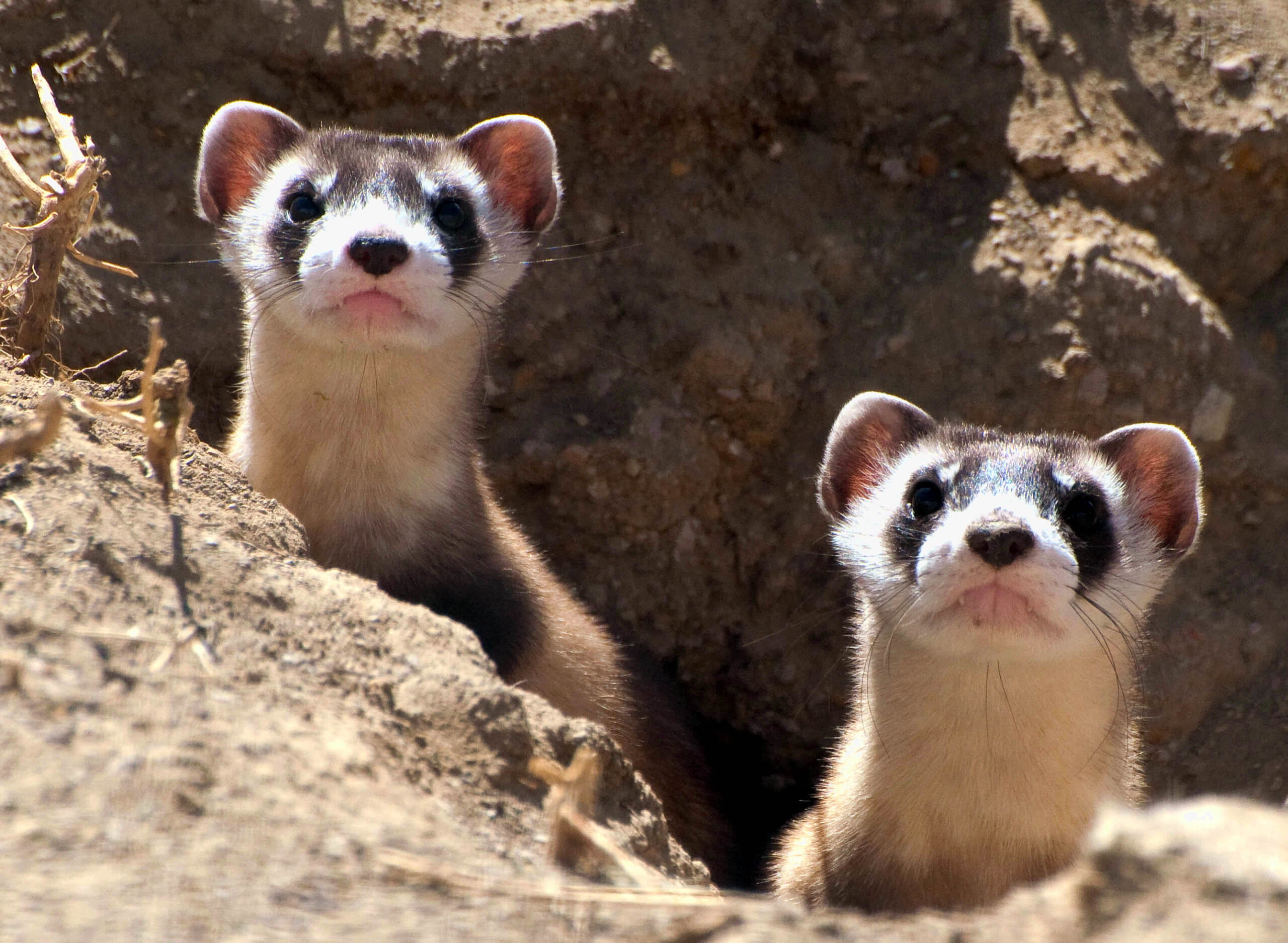
Black-footed ferret kits in a burrow, 2009. Photo by Kimberly Fraser/USFWS (USFWS Mountain-Prairie on flickr, Creative Commons Attribution 2.0 Generic license).
Black-footed ferrets live near and feed largely on prairie dogs (Cynomys), social rodents that live in networks of burrows called "towns." Prairie dogs were (and still often are) considered pests by ranchers in the western US, and the land the prairie dogs inhabited was also valuable for growing crops. Thus, many prairie dog towns were destroyed to make way for agriculture, and black-footed ferrets disappeared along with their preferred food source. By the mid-twentieth century, the black-footed ferret was thought to be extinct, although two small groups of wild ferrets were later discovered in South Dakota and Wyoming.
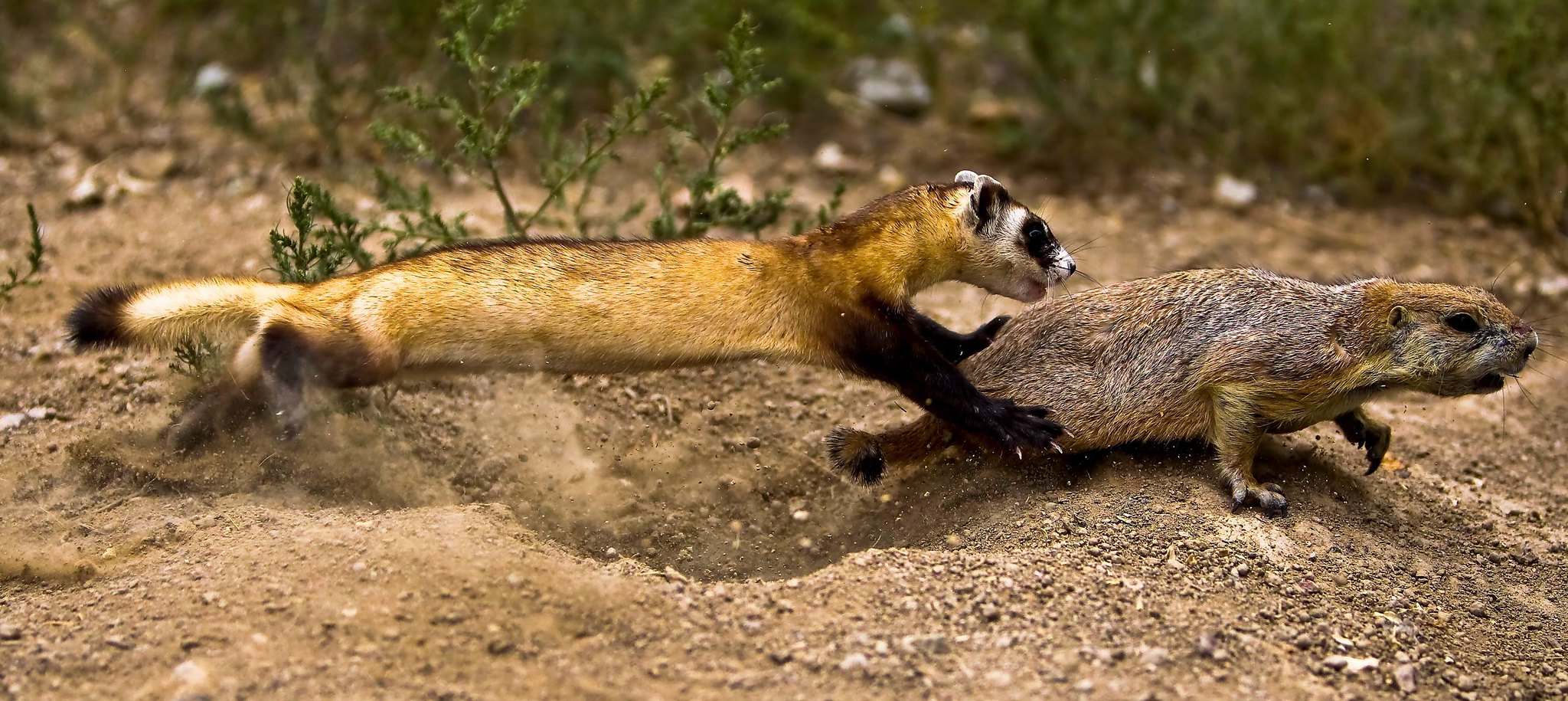
A captive black-footed ferret learning to hunt a prairie dog, National Black-Footed Ferret Conservation Center, Colorado, USA. Photo by Kimberly Fraser/USFWS (USFWS Mountain-Prairie on flickr, Creative Commons Attribution 2.0 Generic license).
What is being done to conserve the black-footed ferret?
Black-footed ferrets have been considered endangered in the US since the 1960s and have been protected under the US Endangered Species Act since 1973.
After their presumed extinction in the 1950s, the first small remaining population of wild black-footed ferrets was discovered in Mellette County, South Dakota, in the 1960s. These animals were captured for a captive breeding program, but that program failed. Wild ferrets were later discovered in Wyoming in the early 1980s, but this population consisted of only 18 animals by 1987. Thus, the ferrets were captured to start a new captive breeding program. This second captive breeding program has successfully increased the population, although not to levels large enough to take the ferrets off the endangered species list.
In 2001, the National Black-Footed Ferret Conservation Center was established in Colorado to manage recovery efforts. The current population of captive ferrets now numbers more than 250 animals, whereas an estimated more than 300 live in the wild, with the largest wild population found in the Conata Basin in Badlands National Park, South Dakota.
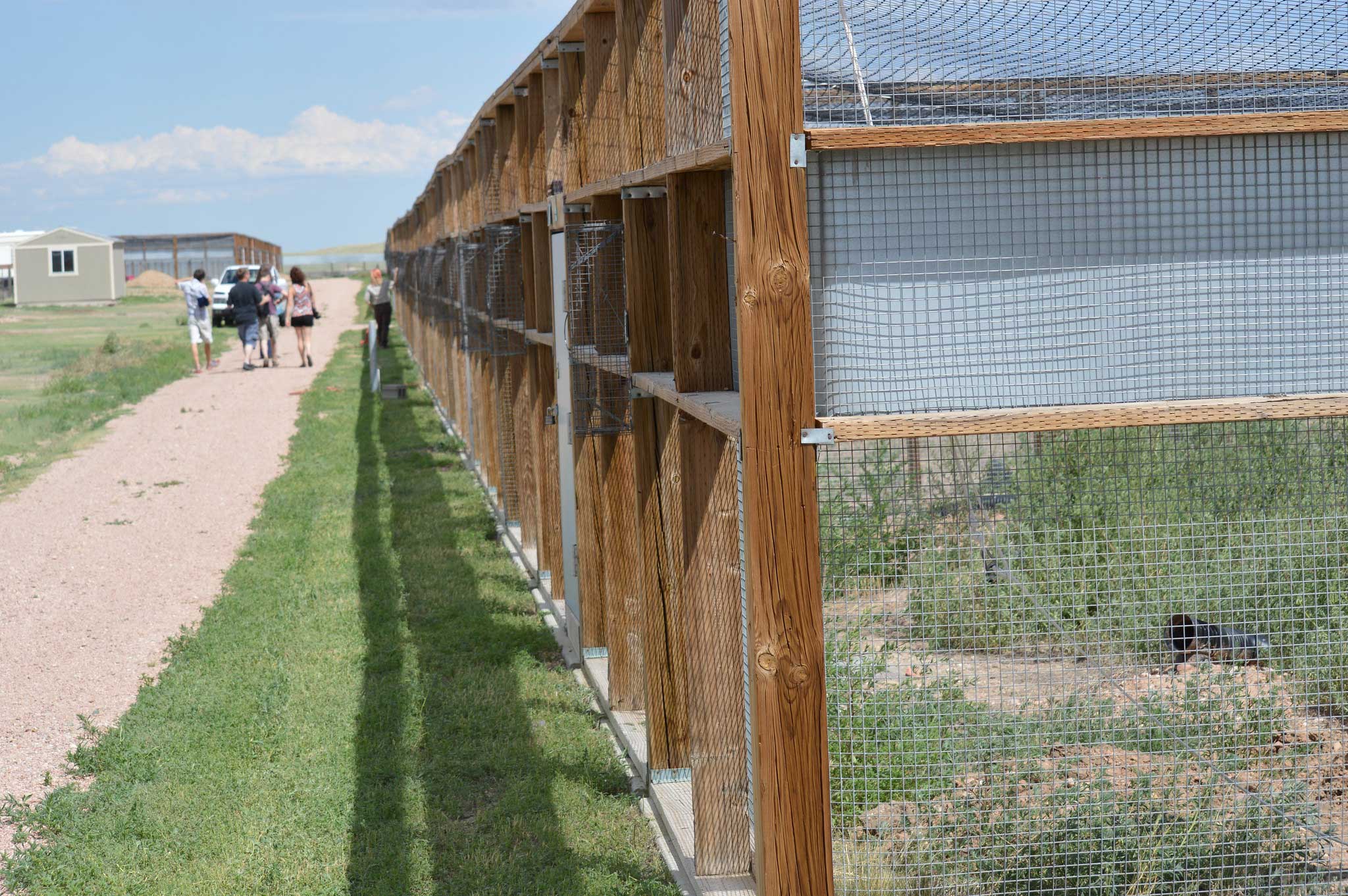
Original caption: "In the summer of 2012, USFWS Region 6 interns visited the National Black-footed Ferret Conservation Center (NBFFCC) in Colorado to learn how the program reintroduces the endangered Black-footed ferret back into its native habitat." Photo by Ryan Moehring/USFWS (USFWS Mountain-Prairie on flickr, Creative Commons Attribution 2.0 Generic license).
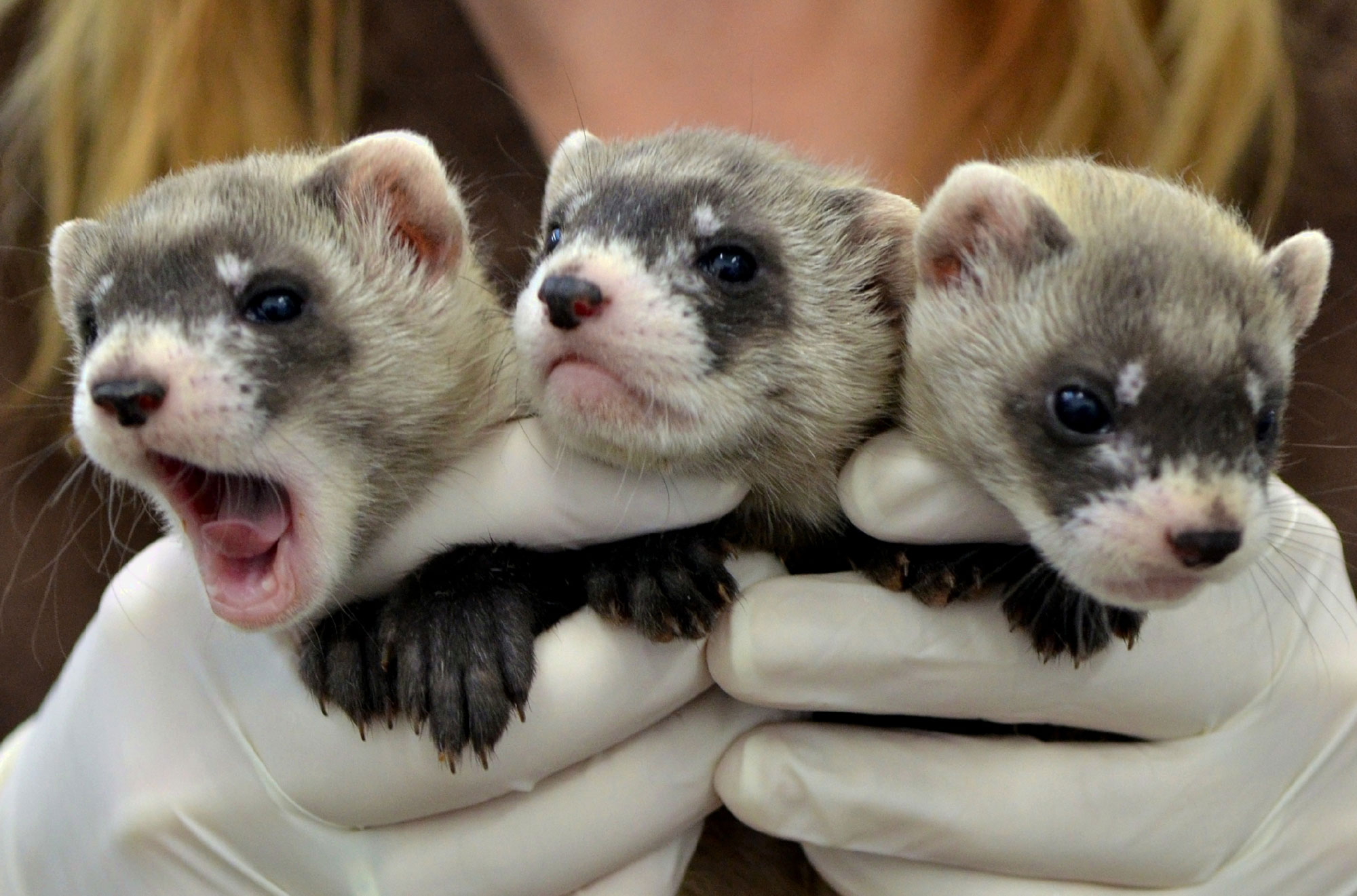
Original caption: "These black-footed ferret kits are being raised at the National Black-footed Ferret Conservation Center in Colorado so they can one day be reintroduced into the wild." Photo by Kimberley Fraser/USFWS (USFWS Mountain-Prairie on flickr, Creative Commons Attribution 2.0 Generic license, image resized).
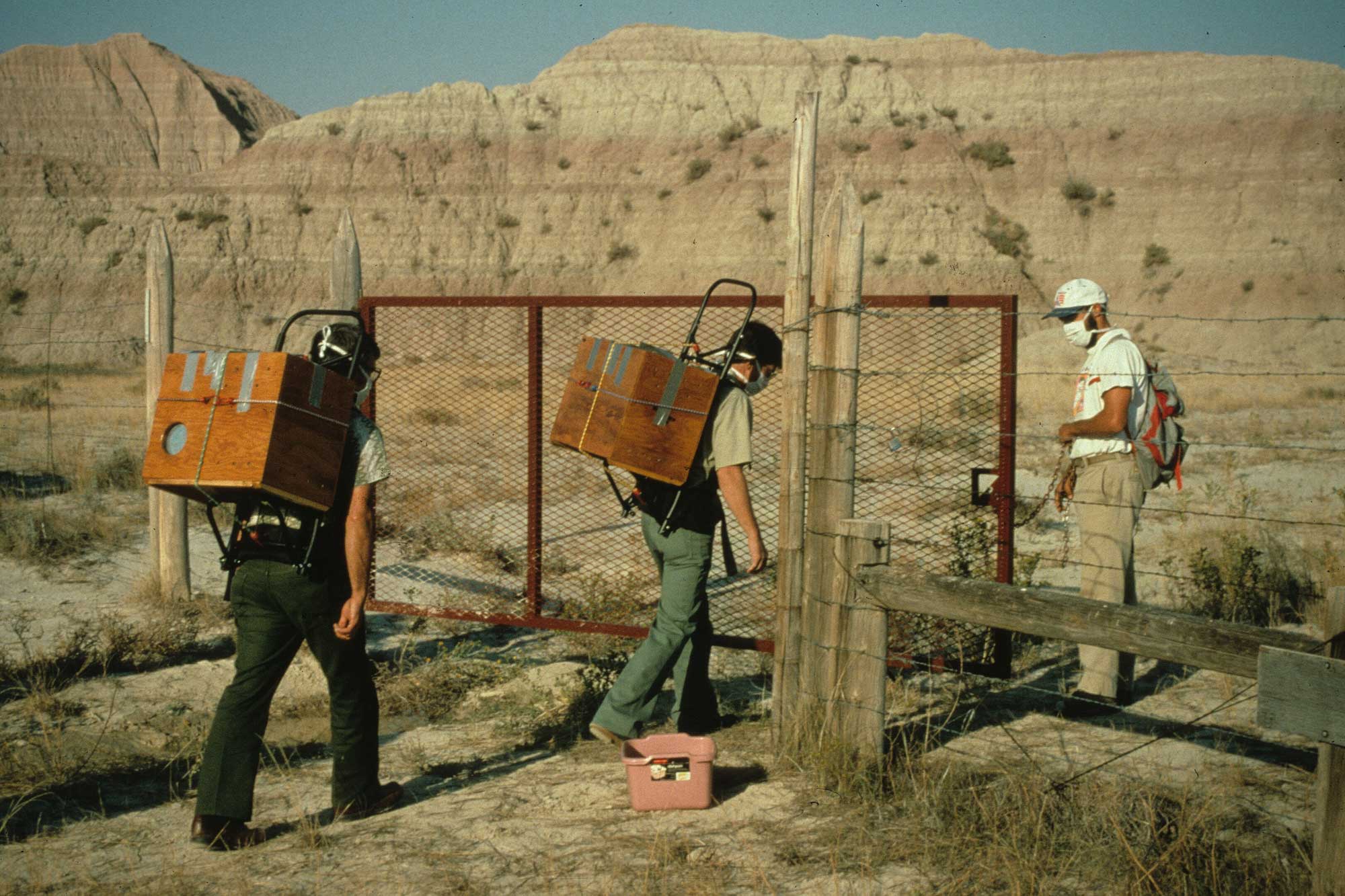
Black-footed ferret release, Badlands National Park, South Dakota, mid- to late 1990s. Photo by National Park Service (Wikimedia Commons, public domain).
What are the barriers to black-footed ferret recovery?
Habitat loss and eradication of prairie dogs
Historically, prairie dogs were seen as nuisance or pest animals that were occupying land that could be used for other activities, like growing crops, grazing livestock, or development. Thus, preparation of land for agriculture and construction often meant removing prairie dogs. Black-footed ferrets and other animals like burrowing owls (Athene cunicularia) that rely on prairie dog towns for food and shelter were collateral damage in the removal of prairie dogs from the landscape. In many places, prairie dogs can still be exterminated or removed by landowners if they are deemed a nuisance. Of the four prairie dog species present in the US, only Utah prairie dogs (Cynomys parvidens) are federally protected.
Whereas black-tailed prairie dogs (Cynomys ludovicianus, the most common species) may once have inhabited 80 to 100 million acres of land, as of 2009 they were found on only about 2.4 million acres in the US. Nonetheless, the total population of black-tailed prairie dogs in the US is likely in the millions. Since prairie dogs are the main prey for black-footed ferrets, the health of their populations is important for ferret recovery.
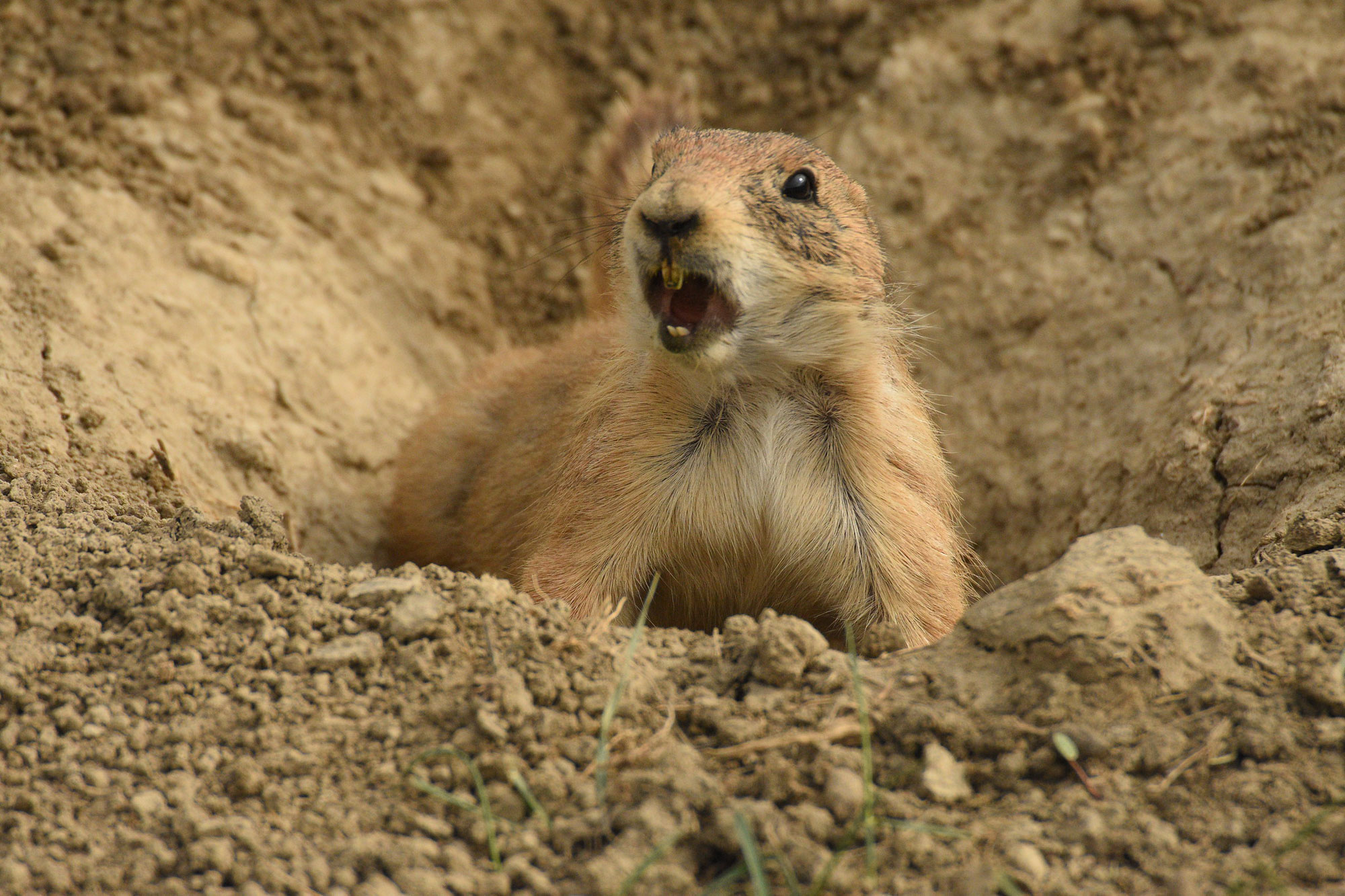
A black-tailed prairie dog at Theodore Roosevelt National Park, North Dakota, USA, 2022. Amaury Laporte (flickr, Creative Commons Attribution 2.0 Generic license, image resized).
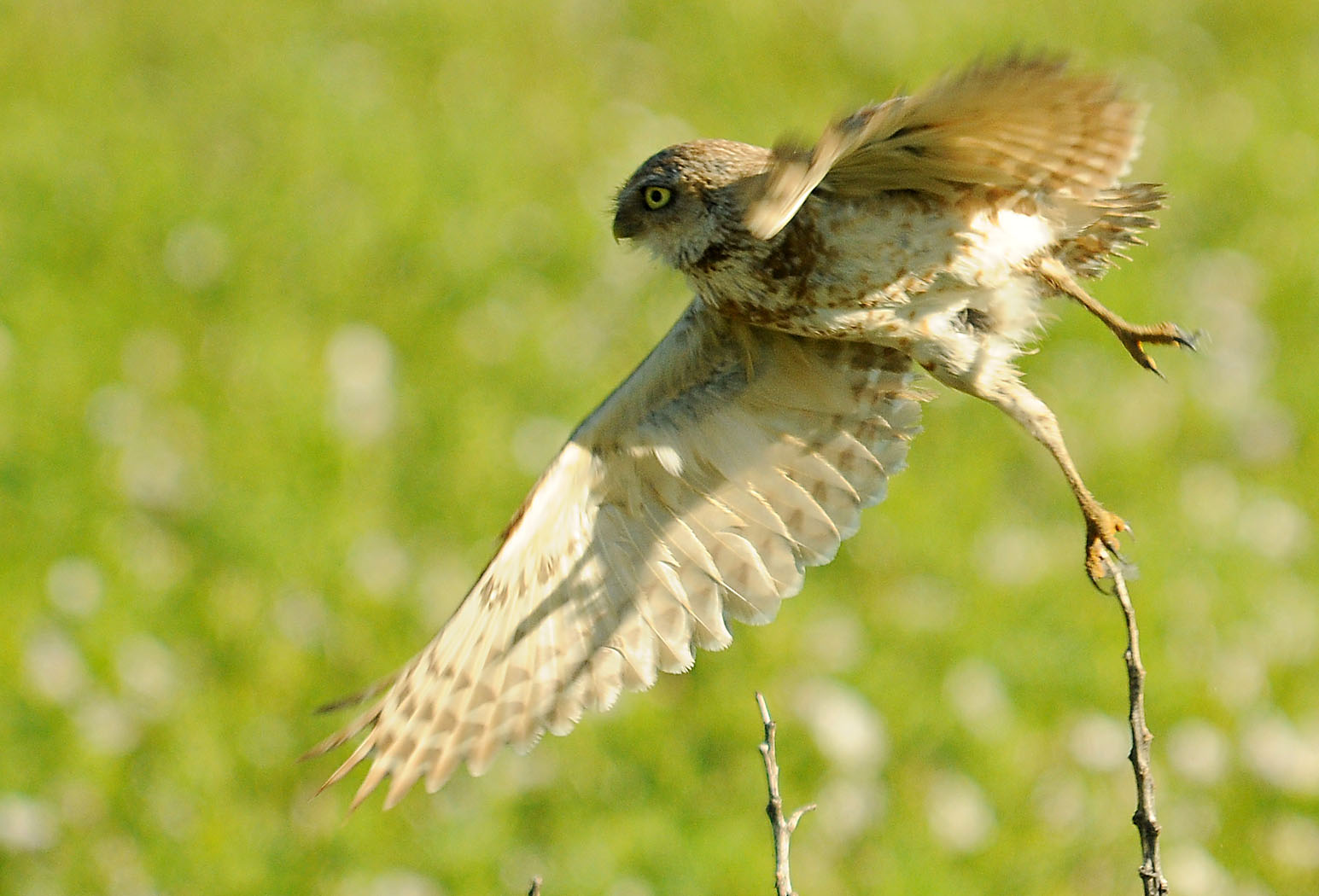
A burrowing owl at Rocky Mountain Arsenal National Wildlife Refuge, Colorado, 2009. Photo by Rich Keen/DRPA (USFWS Mountain-Prairie on flickr, Creative Commons Attribution 2.0 Generic license).
Plague
The largest threat to black-footed ferret recovery is plague, a disease caused by a bacterium (Yersinia pestis) that is carried by rodents and transmitted by fleas. Plague is a relatively new disease in North America. It was first introduced to the western US in 1900 by infected rats that arrived on ships that probably came from Asia, where plague is endemic. It now occurs in wild rodent populations in the western US. Plague carried by wild animals is called sylvatic plague. Plague can also infect humans, although there are typically only a few human cases per year in North America.
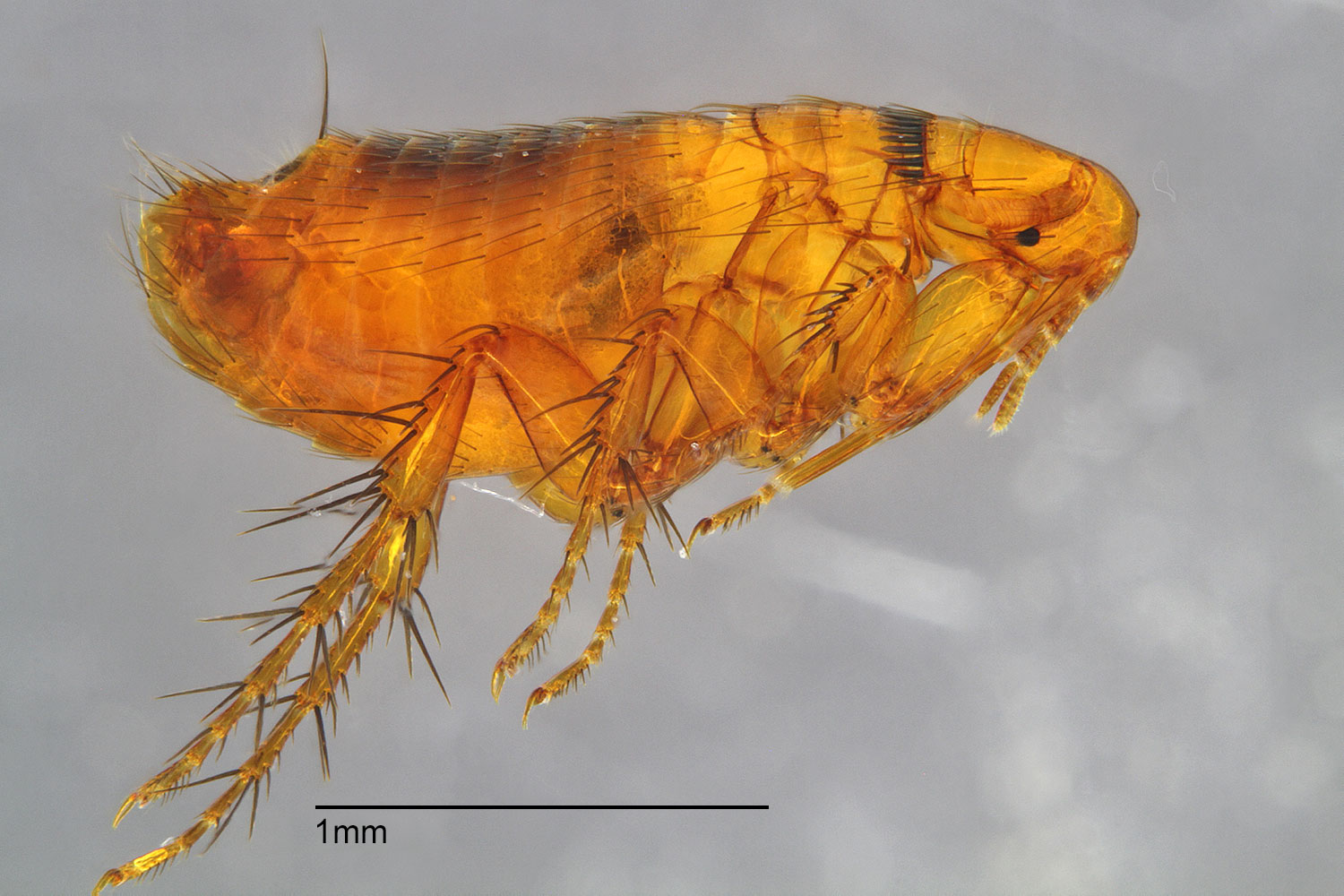
A prairie dog flea (Oropsylla hirsuta), which can carry the plague bacterium (Yersinia pestis). Photo by Gary D. Alpert, Ph.D. and Jordan Mitchell, Northern Arizona University, Department of Biological Sciences (Centers for Disease Control and Prevention Public Health Image Library, public domain).
Black-footed ferrets have no natural resistance to the plague, so it kills most ferrets that it infects. Thus, captive and wild black-footed ferrets must be vaccinated to protect the species from extinction. Capturing and vaccinating wild ferrets is difficult and time-consuming, especially because each animal should ideally receive two doses of vaccination. Scientists are also exploring the possibility of genetically modifying black-footed ferrets to introduce plague resistance.
Compounding the problem is that prairie dogs are also killed by plague, which can wipe out the major food source for ferrets. Efforts have been made to protect some prairie dog towns by controlling the fleas that transmit the disease.
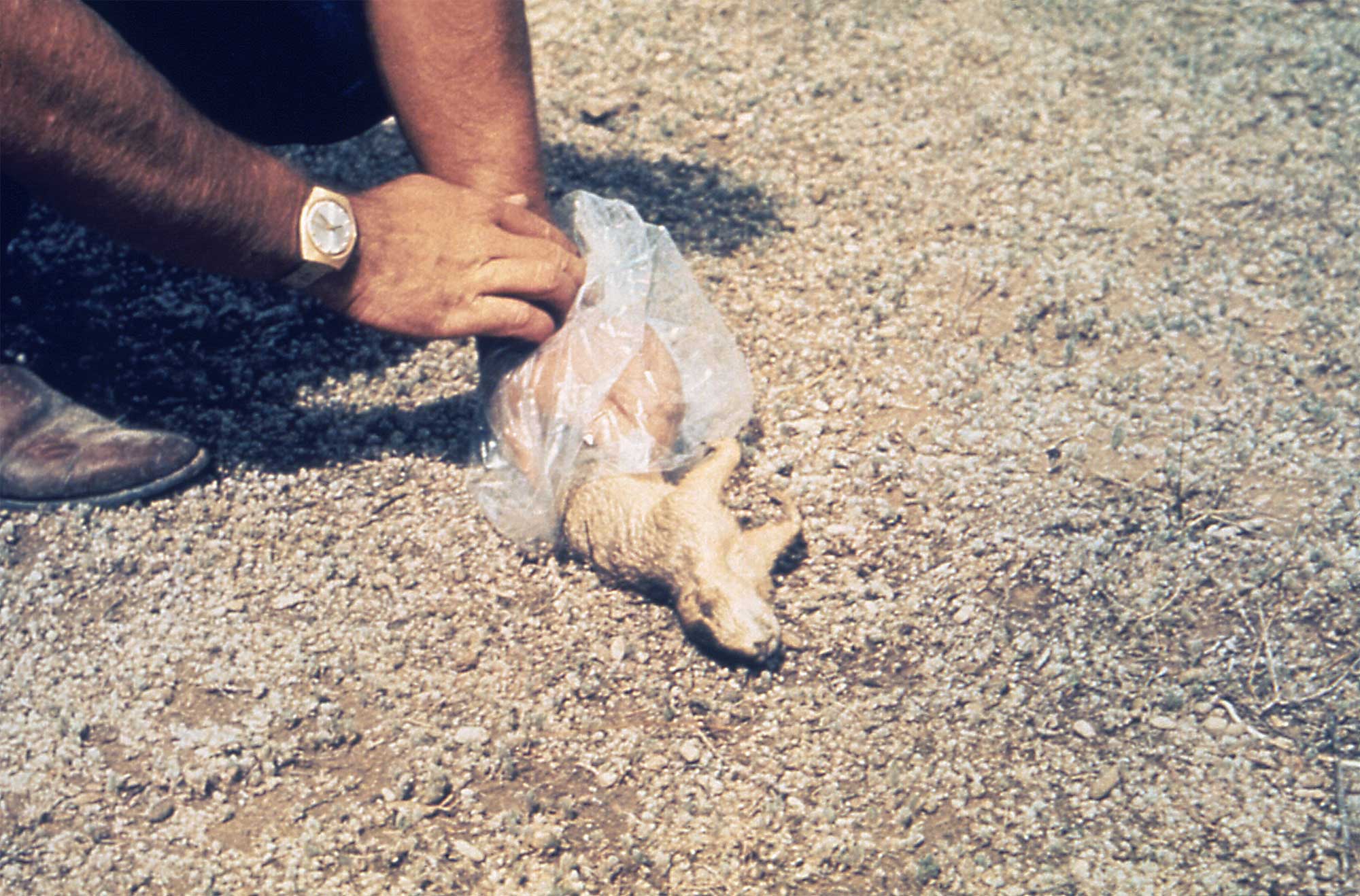
Original caption: "This image depicts a prairie dog, Cynomys sp., which had succumbed to the plague, having been inoculated with the bacterium, Yersinia pestis. In this particular view, a field epidemiologist was in the process of collecting this deceased colony member, picking it up in a plastic bag, later to be analyzed in a laboratory setting. When plague is introduced into Cynomys colonies, it has a tendency to spread quickly, causing massive mortality." Photo source: Centers for Disease Control and Prevention Public Health Image Library (public domain).
Low genetic diversity
Another issue that the black-footed ferret faces is that, until recently, all black-footed ferrets in the captive breeding program descended from seven animals. This is because only some members of the population of ferrets discovered in Wyoming in the 1980s were able to successfully breed in captivity. Thus, the modern population of ferrets suffers from very limited genetic diversity, a problem known as the founder effect.
Luckily, sperm and other cells from black-footed ferrets that did not breed successfully were frozen and preserved, and these samples are being used to increase the genetic diversity of the captive ferret population. In 2010, frozen sperm from black-footed ferrets that were alive in the 1980s but did not breed (including ferrets called Rocky and Scarface) was used in the captive breeding program to produce kits.
Efforts are also underway to clone and breed another ferret whose tissue has been frozen since the 1980s. The cells used in first black-footed ferret cloning effort came from a female ferret named Willa. Some of Willa's cells were preserved by the San Diego Wildlife Alliance Frozen Zoo in California in the 1980s. In 2020, these cells were used to create an embryo that was transferred into a surrogate mother (a domesticated ferret) and grew into the first black-footed ferret clone, Elizabeth Ann. Although Elizabeth Ann could not successfully breed due to a problem with her uterus, the technology still holds promise for increasing the genetic diversity of black-footed ferrets.
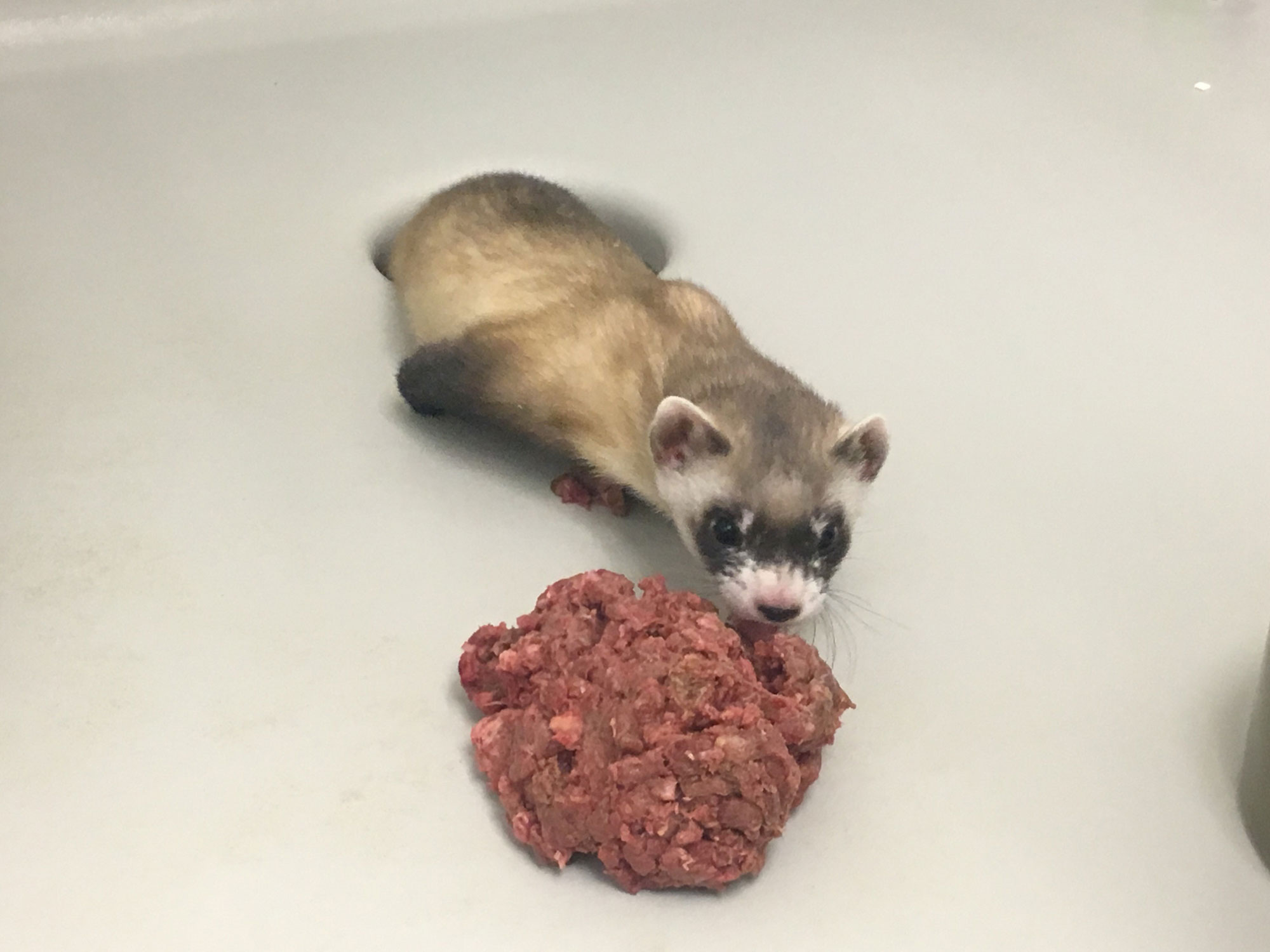
Elizabeth Ann, the clone of Willa, at 60 days old, 2021. USFWS National Black-footed Ferret Conservation Center (USFWS Mountain-Prairie on flickr, Creative Commons Attribution 2.0 Generic license, image resized).
How are institutions in Albuquerque helping the black-footed ferret?
The Museum of Southwestern Biology has a collection of black-footed ferret specimens, including one specimen from 1929, as well as about 45 specimens that date from the 1970s to 1990. The 1929 specimen is especially important, since this animal dates to before the time when ferrets were nearly wiped out, and is much older than the small remnant ferret populations that were discovered in the 1970s and 1980s. The skins and skeletons of Rocky, Scarface, and Willa are held in the museum's collections.
Specimens held by the Museum of Southwestern Biology have been used in in several studies. The oldest study was published in 1940 and was based on the museum's 1929 specimen, a female ferret that was captured as a kit and raised in captivity for a short time before being euthanized. Several more recent studies have investigated the morphology (morphology is the study of form) and genetics of black-footed ferrets using Museum of Southwestern Biology specimens.
Resources
Web resources
Black-footed ferret (Museum of Southwestern Biology): http://www.msb.unm.edu/divisions/mammals/the-collection/black-footed-ferret.html
Black-footed ferret (US Fish & Wildlife Service): https://www.fws.gov/species/black-footed-ferret-mustela-nigripes
Black-footed ferret (US Fish & Wildlife Service Environmental Conservation Online System): https://ecos.fws.gov/ecp/species/6953
Black-footed ferret: Rebounding in the badlands (Badlands National Park): https://www.nps.gov/articles/000/black-footed-ferret-badl.htm
Endangered Species Act protection for black-tailed prairie dog is not warranted (US Fish & Wildlife Service): https://www.fws.gov/press-release/2009-12/endangered-species-act-protection-black-tailed-prairie-dog-not-warranted
IUCN Red List of Threatened Species: https://www.iucnredlist.org/
Plague (US Centers for Disease Control and Prevention): https://www.cdc.gov/plague/index.html
Sylvatic plague (US Geological Survey): https://www.usgs.gov/programs/fish-and-wildlife-disease/sylvatic-plague
Articles
Fritts, R. 2022. Cloning goes wild. Science, 13 January 2022. https://www.science.org/content/article/conservation-first-cloned-ferret-could-help-save-her-species
Wu, K.J. 2024. How long should a species stay on life support? The Atlantic, 15 March 2024. https://www.theatlantic.com/science/archive/2024/03/black-footed-ferret-vaccine-conservation/677733/
Scientific articles
Aldous, S.E. 1940. Notes on a black-footed ferret raised in captivity. Journal of Mammology 21: 23-26.
Wisely, S.M., J.J. Ososky, and S.W. Burskirk. 2002. Morphological changes to black-footed ferrets (Mustela nigripes) resulting from captivity. Canadian Journal of Zoology 80: 1562-1568. https://doi.org/10.1139/z02-160
Wisely, S.M., D.B. McDonald, and S.W Buskirk. 2003 Evaluation of the genetic management of the endangered black-footed ferret (Mustela nigripes). Zoo Biology 22: 203-303. https://doi.org/10.1002/zoo.10089
Videos
"How the black-footed ferret is making a comeback from the brink of extinction" PBS News Weekend (10 December 2023): https://www.pbs.org/newshour/show/how-the-black-footed-ferret-is-making-a-comeback-from-the-brink-of-extinction