


Page snapshot: An overview of the Channel Islands fox, including what it is, why it is imperiled, what it is being done to help it recover.
Topics covered on this page: What is the Channel Islands fox and why is it imperiled?; What has been done to conserve the Channel Islands fox?; What is the status of the Channel Islands fox recovery?; How are institutions in Albuquerque helping the Channel Islands fox?; Resources.
Credits: Funded by the National Science Foundation. Any opinions, findings, and conclusions or recommendations expressed in this material are those of the author(s) and do not necessarily reflect the views of the National Science Foundation. Page by Elizabeth J. Hermsen (2024).
Updates: Page last updated May 7, 2024.
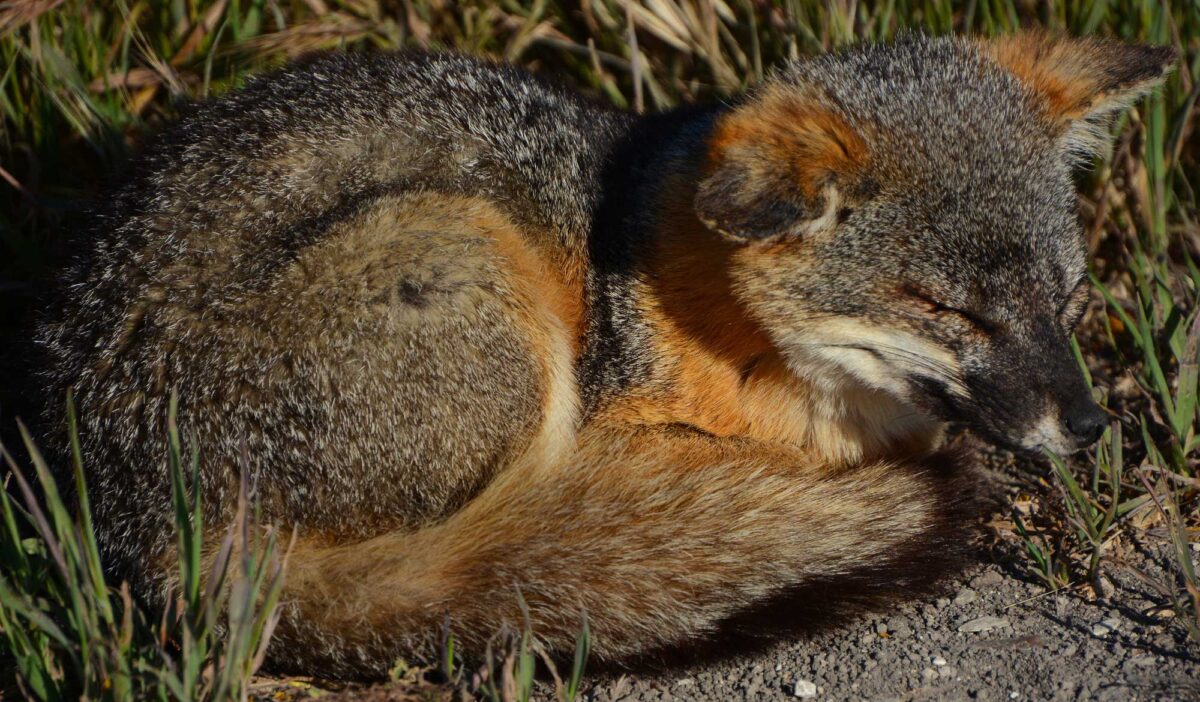
Image above: A resting Channel Islands fox, Channel Islands National Park, California, USA. Photo by Reuven Bank, National Park Service (public domain).
What is the Channel Islands fox and why is it imperiled?
The Channel Islands fox (Urocyon littoralis) is a fox that lives only on the Channel Islands, which are group of islands in the Pacific Ocean off the coast of southern California. The Channel Islands fox is closely related to and descended from the gray fox (Urocyon cinereoargenteus), a species of fox found throughout Mexico, much of the United States, and a small part of southern Canada and northern South America.
The most noticeable difference between the species is their relative size: the gray fox is larger than the Channel Islands fox. The smaller size of the island fox is due to a phenomenon known as insular dwarfism, the tendency of some island species to evolve to become smaller than their mainland counterparts due to limited space and resources. Another example of insular dwarfism in the Channel Islands is the extinct Channel Islands pygmy mammoth (Mammuthus exilis), which was much smaller than the related mainland Columbian mammoth (Mammuthus columbi, also extinct).
Six of the Channel Islands have foxes—San Clemente, San Miguel, San Nicolas, Santa Catalina, Santa Cruz, and Santa Rosa—and each island's population is a different subspecies. In the 1990s to early 2000s, the populations of five of the subspecies declined severely, and four (all but the San Clemente fox) were placed on the US list of endangered species in 2004.
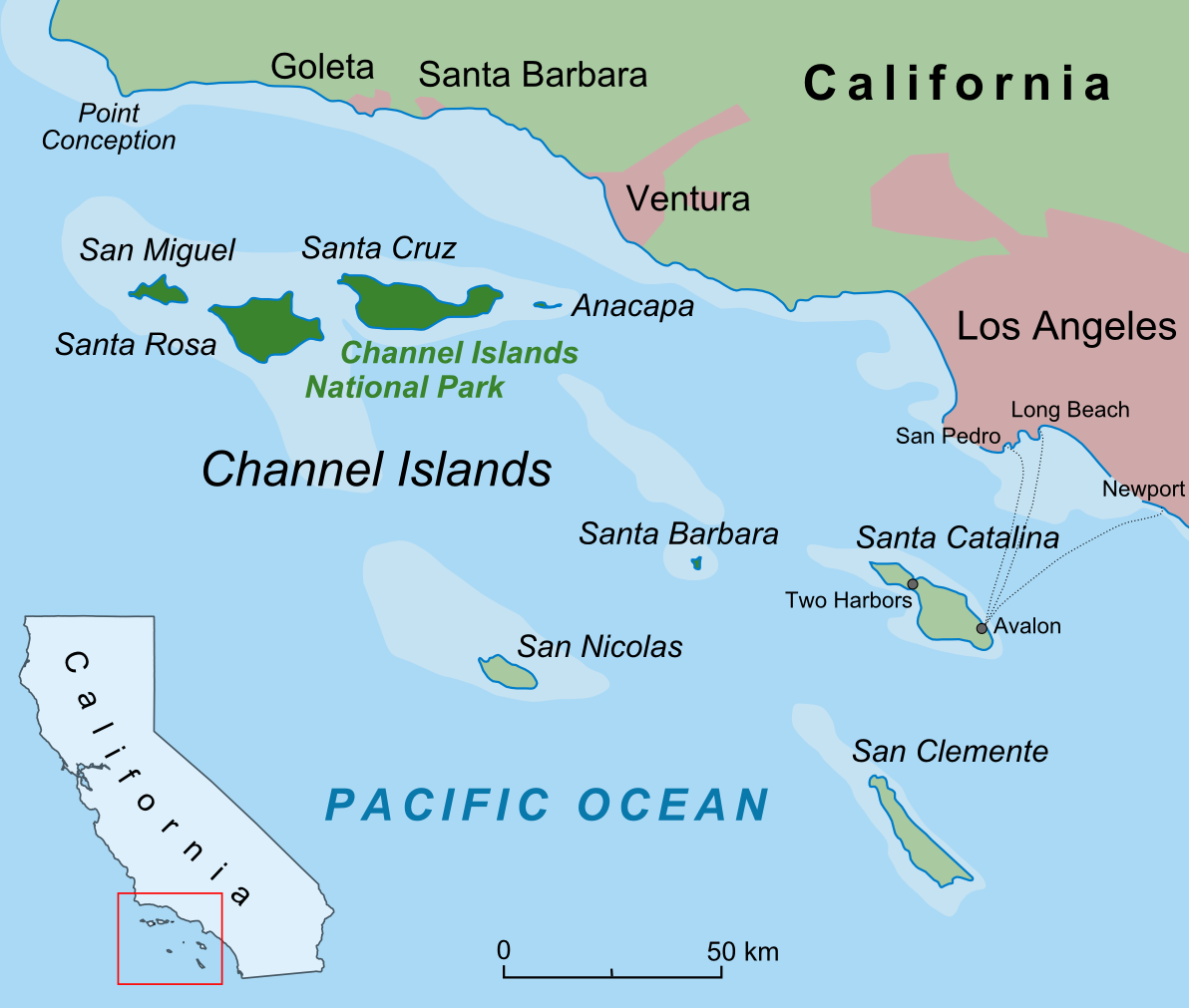
Map of the Channel Islands, California, USA. The Channel Islands are a group of eight islands: San Miguel, Santa Rosa, Santa Cruz, Anacapa, Santa Barbara, San Nicolos, Santa Catalina, and San Clemente. All but the smallest islands (Anacapa and Santa Barbara) have Channel Island foxes. Map by Lencer (Wikimedia Commons, Creative Commons Attribution-ShareAlike 3.0 Unported license).
San Miguel, Santa Cruz, and Santa Rosa islands
The numbers of foxes on San Miguel, Santa Cruz, and Santa Rosa islands fell because they were being killed by golden eagles (Aquila chrysaetos). Golden eagles are large raptors (a group of predatory birds) that are native to North America and Eurasia. Golden eagles can have wingspans of more than seven feet (more than two meters) and feed mostly on small- to medium-sized mammals, although they sometimes hunt larger mammals. The Channel Islands foxes are about the size of housecats.
The Channel Islands were originally inhabited by bald eagles (Haliaeetus leuococephalus), which are similar in size to golden eagles but eat mostly fish and other birds. In the latter part of the 20th century, bald eagle numbers fell severely due to the effects of pesticides (primarily DDT), illegal killing, and habitat destruction. When the bald eagle population declined in the Channel Islands, golden eagles moved in and fed on the foxes. At their lowest point, two islands had 15 foxes each, whereas the third island around 80 foxes.
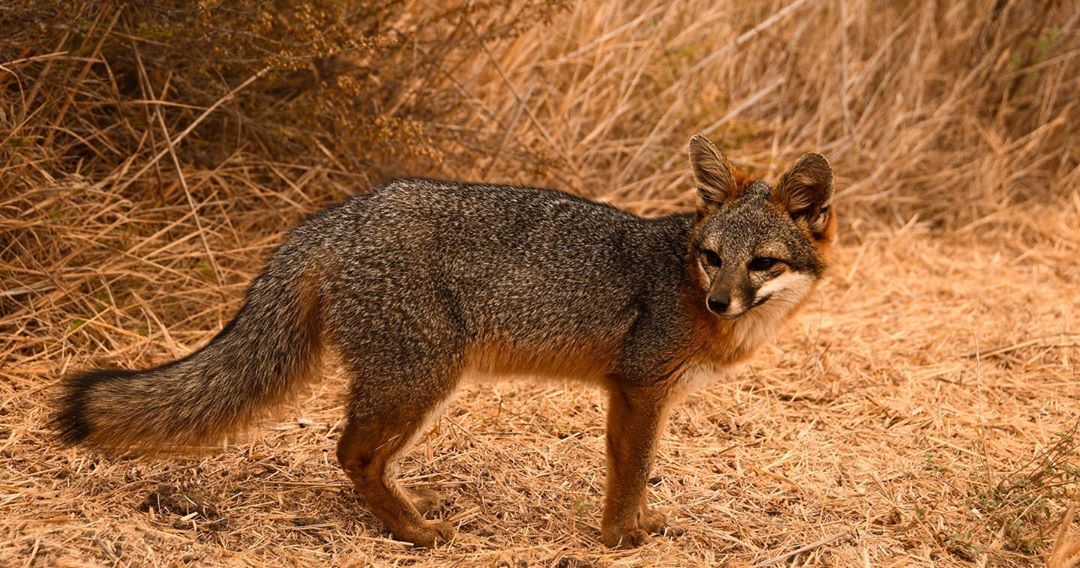
Santa Rosa Island fox (Uryocyon littoralis santarosae). Source: US National Park Service (public domain).
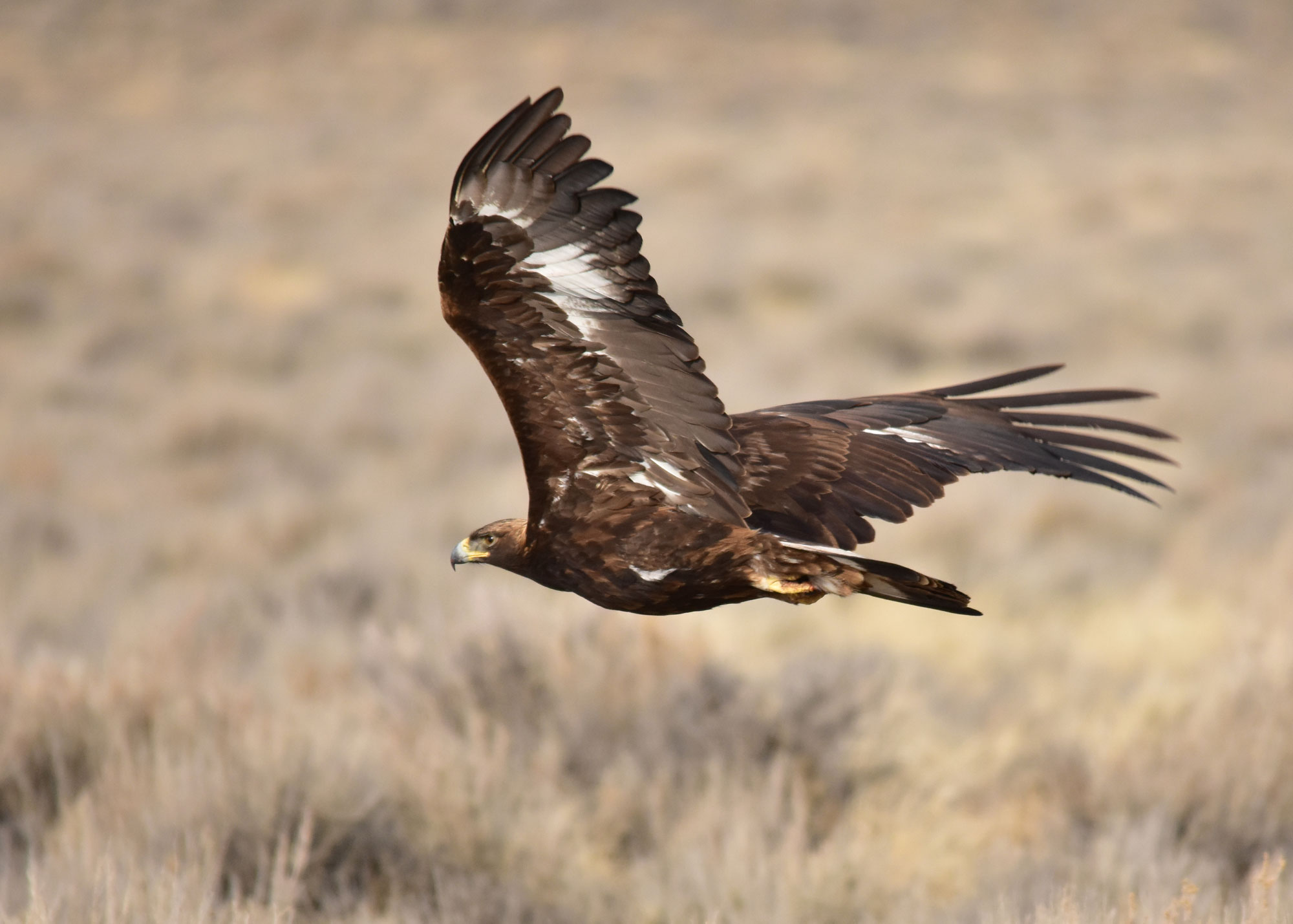
A golden eagle at Seedskadee National Wildlife Refuge, Wyoming, USA. Photo by Tom Koerner/USFWS (USFWS Mountain-Prairie on flickr, Creative Commons Attribution 2.0 Generic license, image resized).
Santa Catalina Island
The Santa Catalina Island foxes were decimated by canine distemper, a fatal disease that can infect canids (dogs, wolves, foxes and related animals), mustelids (skunks, weasels, and related animals), and some other animals like raccoons. Distemper is caused by a virus and can be transmitted from animal to animal by coughing and sneezing, as well as in feces, salvia, and urine. It can have respiratory, gastrointestinal, and neurologic symptoms. The disease is often fatal, although the fatality rate varies by species.
Canine distemper was probably brought to Santa Catalina Island by an infected raccoon that was transported accidentally on a boat. Distemper killed about 90% of the foxes on the island within a year.
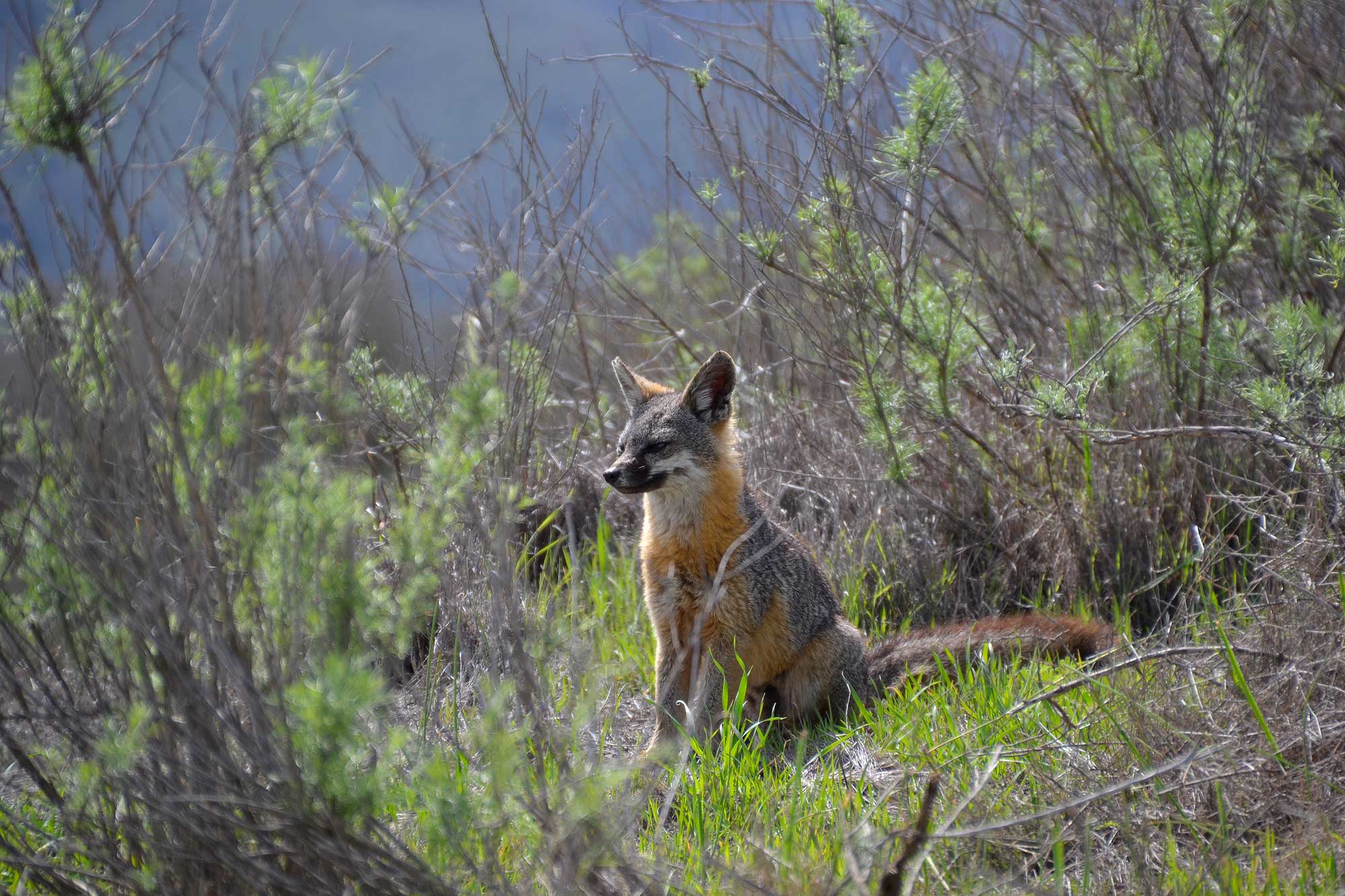
A Catalina Island fox (Urocyon littoralis catalinae), 2014. Photo by Kiloueka (Wikimedia Commons, public domain).
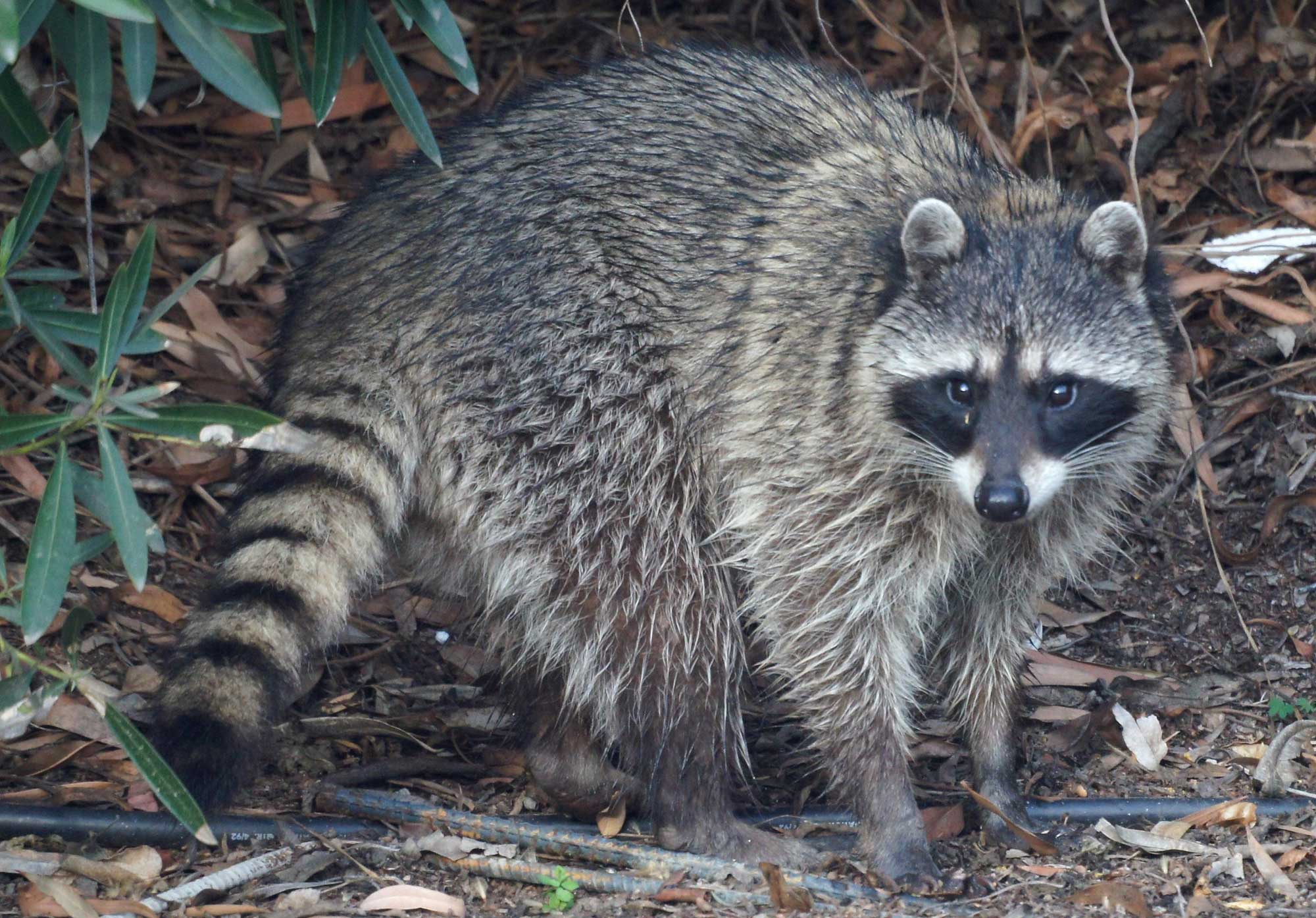
A raccoon, California, USA. Photo by Mike's Birds (flickr, Creative Commons Attribution-ShareAlike 2.0 Generic license, image resized).
San Clemente Island
Ironically, the San Clemente Island fox declined due to attempts to help an endangered species of bird, the San Clemente loggerhead shrike (Lanius ludovicianus mearnsi). At its lowest, the population of the shrike numbered about 13 to 14 individuals. Part of the plan to help the loggerhead shrike included capturing and removing or killing foxes and other predators to keep them from raiding nests or killing the birds. This misguided approach to preventing the fox from killing birds caused the fox population to drop significantly in a short period of time.
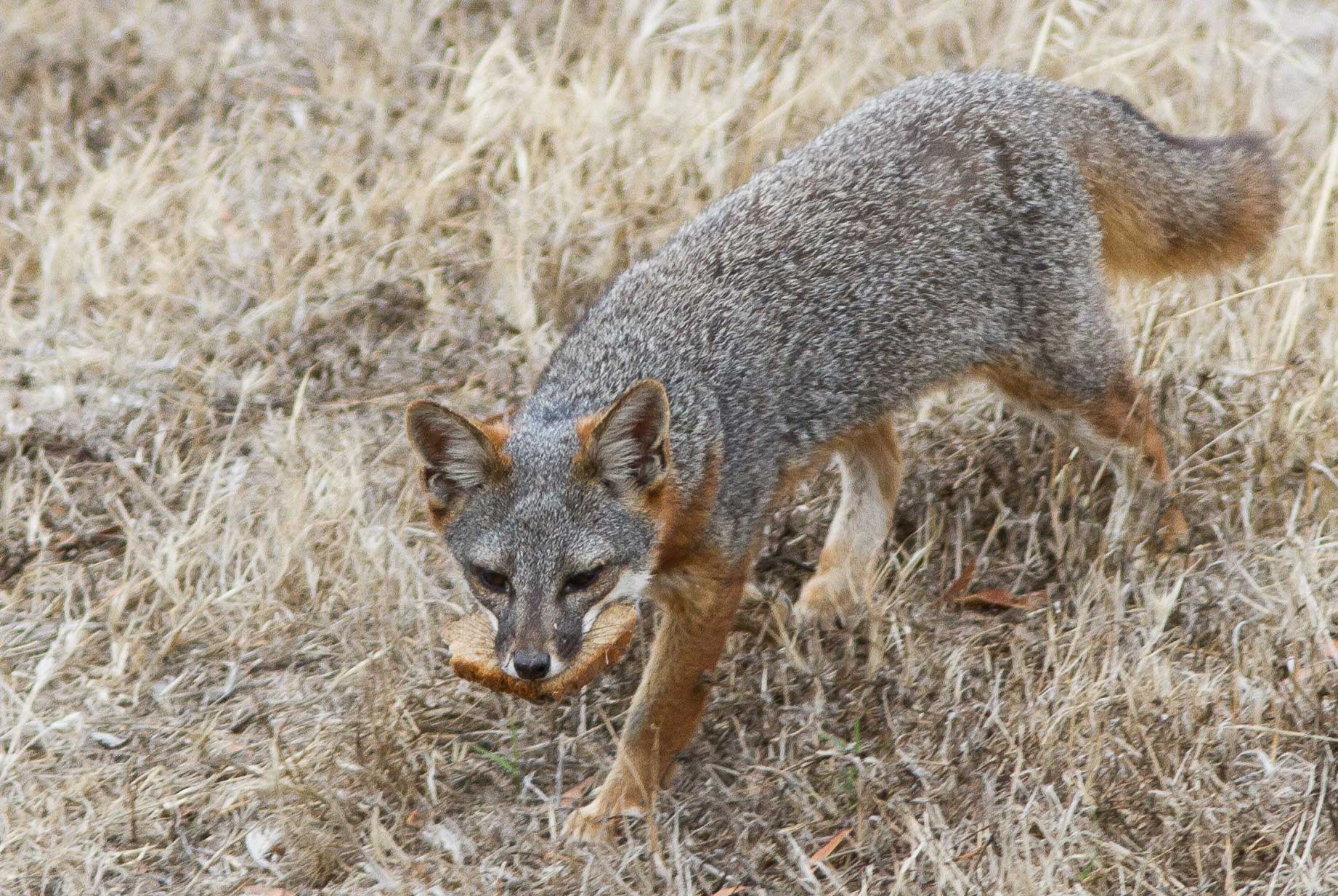
A San Clemente Island fox (Urocyon littoralis clementae), 2019. Photo by Adam J. Searchy (iNaturalist, Creative Commons Attribution 4.0 International license).
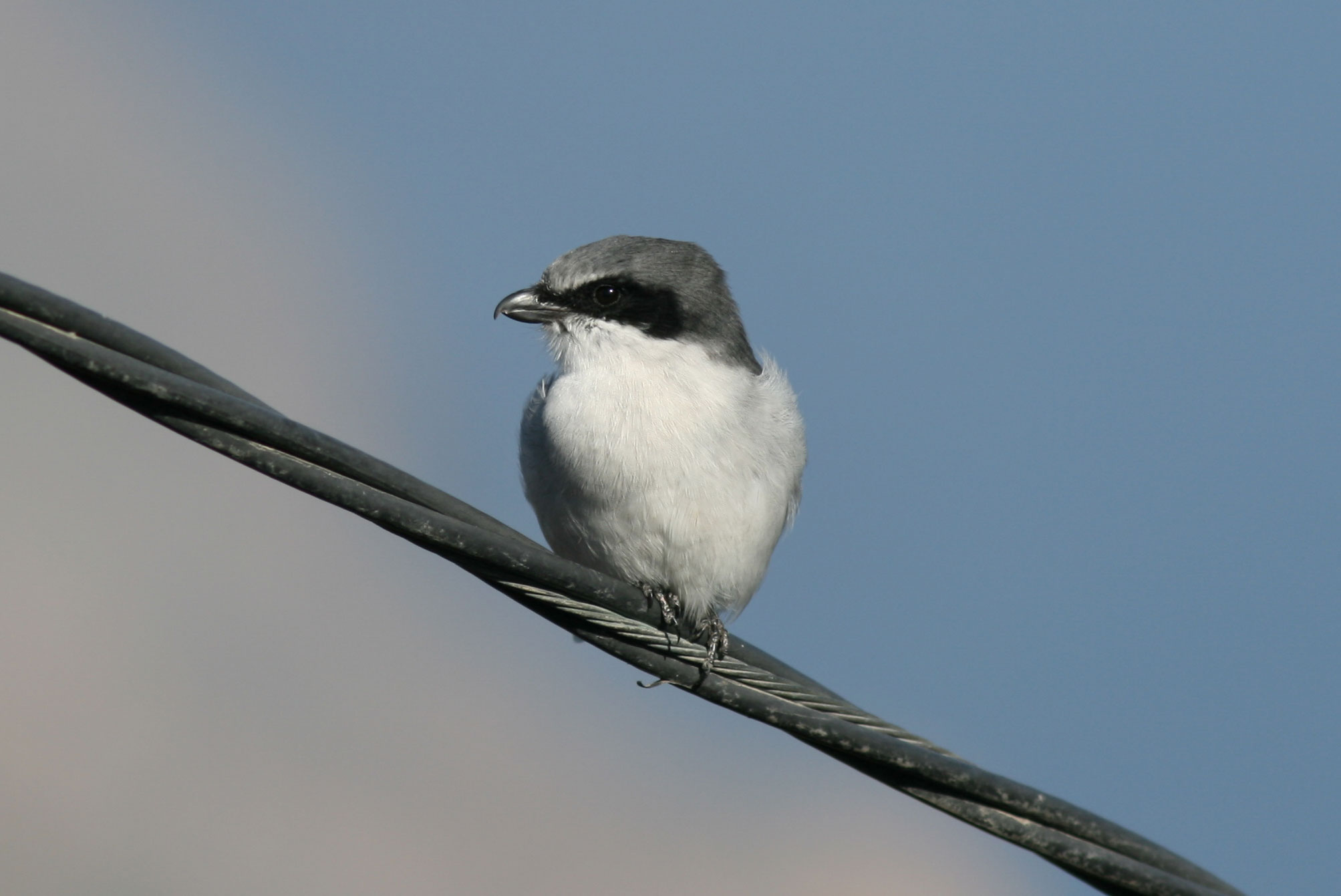
A San Clemente loggerhead shrike, 2013. Photo by Justyn Stahl (iNaturalist, Creative Commons Attribution-NonCommercial 4.0 International license).
What has been done to conserve the Channel Islands fox?
San Miguel, Santa Cruz, and Santa Rosa islands
San Miguel, Santa Cruz, and Santa Rosa islands are the northernmost Channel Islands and within Channel Islands National Park. Because the foxes on these islands were being killed by golden eagles, the National Park Service developed a plan to relocate the golden eagles, which are a protected species.
In order to discourage the golden eagles from coming back to the islands, bald eagles were reintroduced. Pigs, mule deer, and elk, all animals not native to the islands were removed. These animals encouraged golden eagles because the eagles hunted their young. The removal of these animals also allowed native plants to recover, which provided more places for the foxes to hide. A captive breeding program for the foxes was established to help their populations grow.
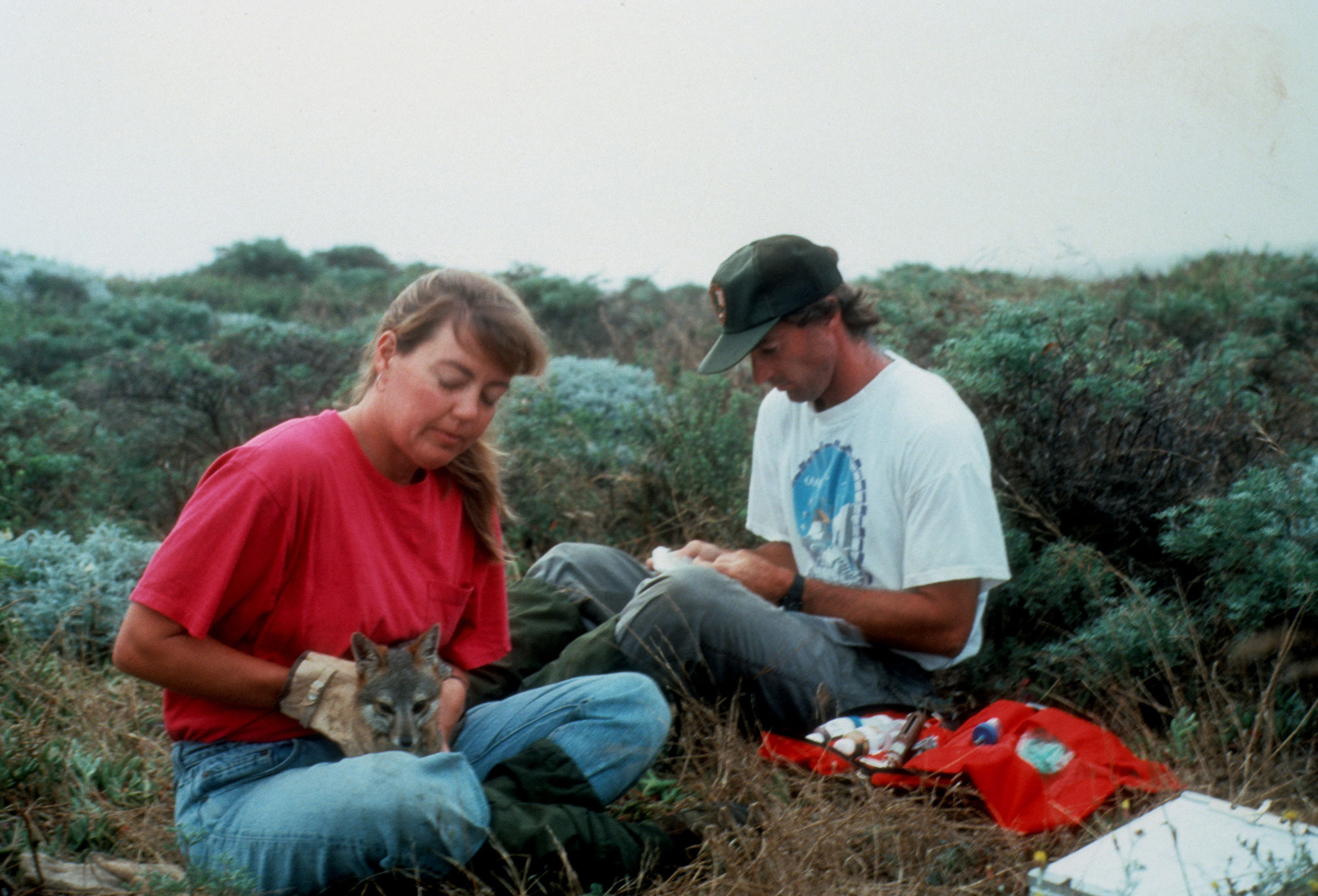
Channel Islands fox monitoring. Source: US National Park Service (public domain).
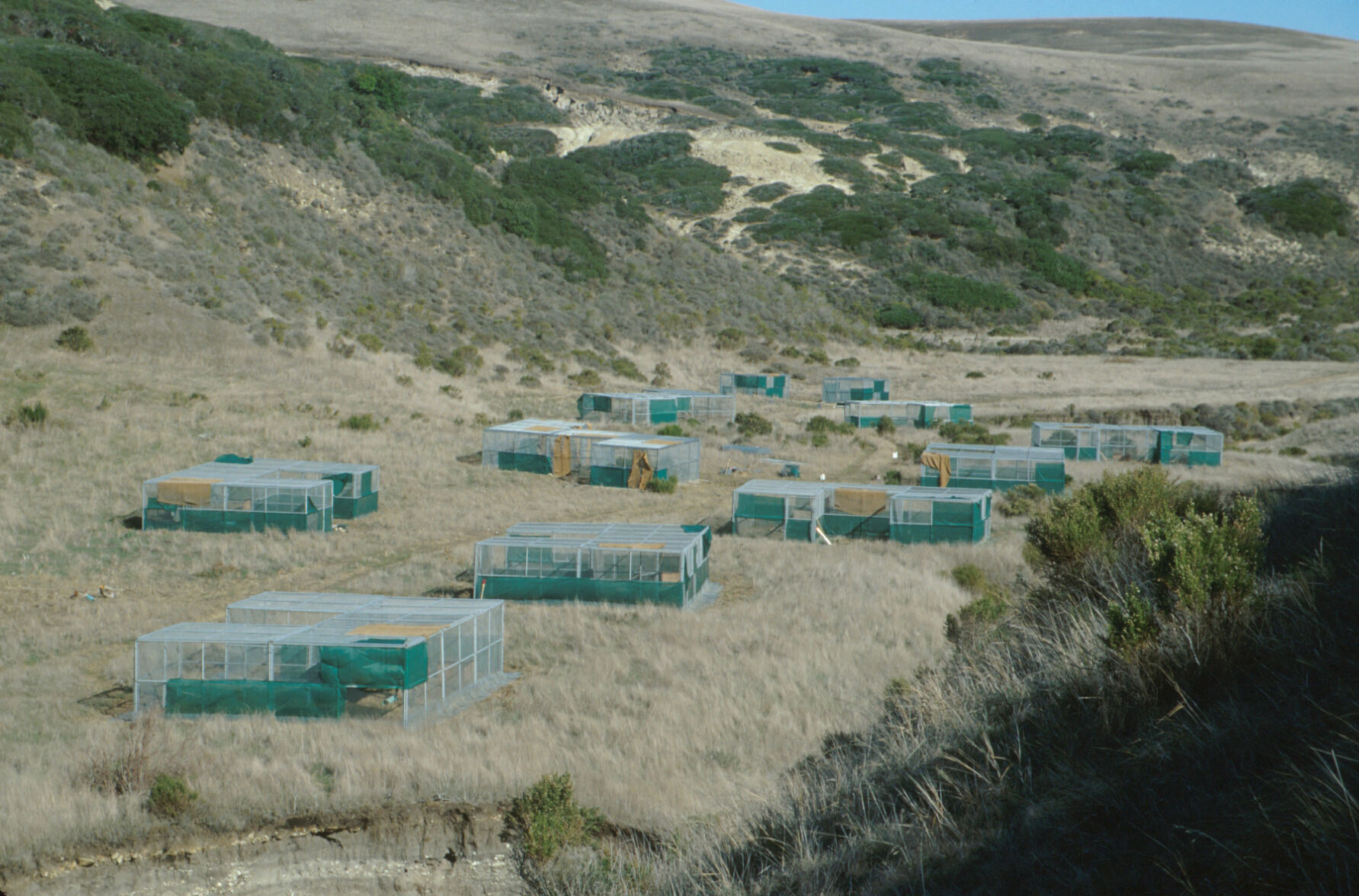
Pens for the captive breeding program on Santa Rosa Island. Photo by Gustav Verdouw (National Park Service, public domain).
Santa Catalina Island
The land on Santa Catalina Island is privately owned. The island has a city, Avalon, a tourist hub that can be reached by ferry and where private boats can land. A large amount of the land on the island is owned by the Catalina Island Conservancy. The mission of the conservancy is to conserve land on the island and provide outdoor recreational and educational opportunities.
When distemper began to affect the foxes on the island, the conservancy addressed the problem in two major ways: it trapped foxes to start a captive breeding program, and it vaccinated the foxes against distemper.
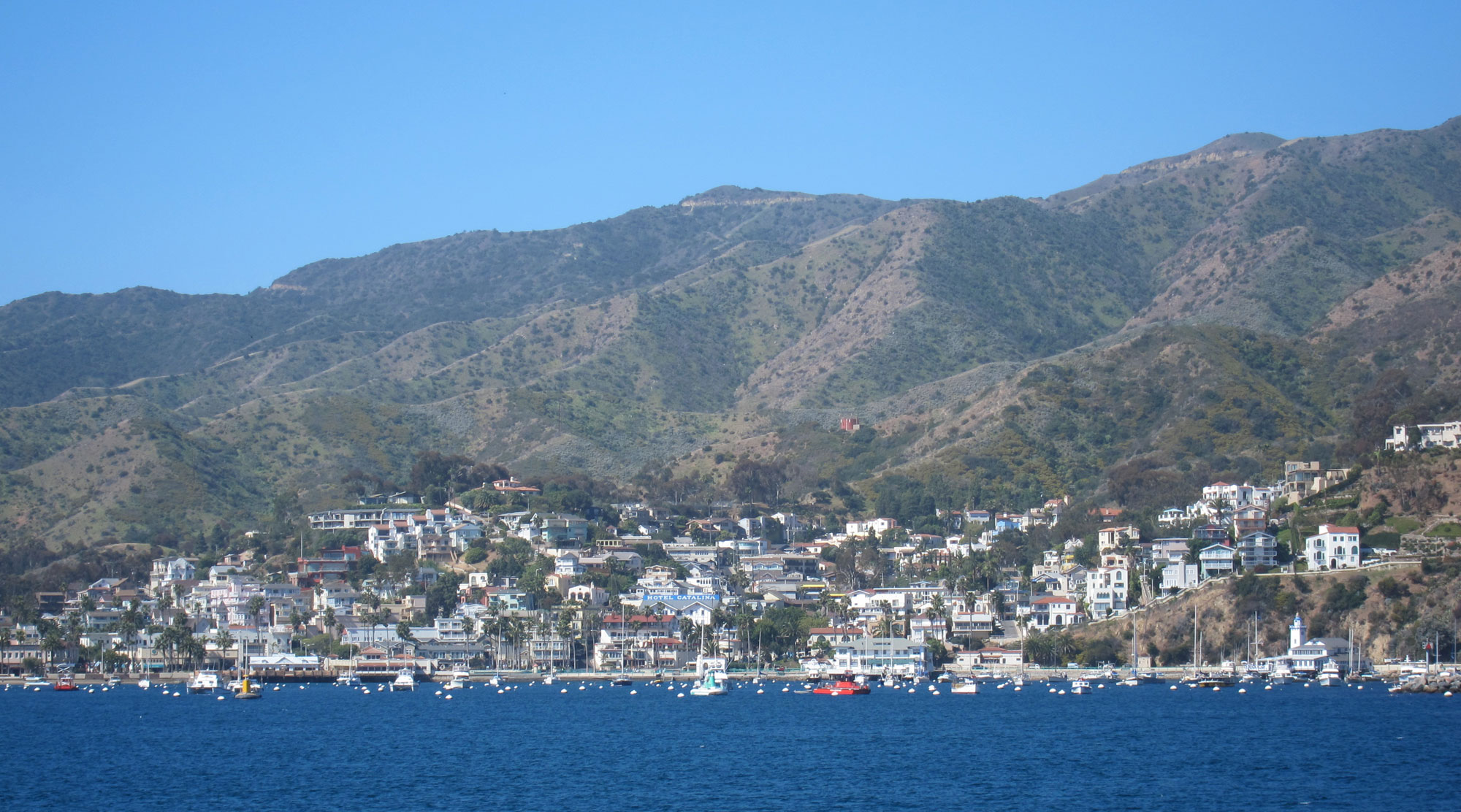
Avalon, Santa Catalina Island, California, USA, 2013. Photo by Ken Lund (flickr, Creative Commons Attribution-ShareAlike 2.0 Generic license, image cropped and resized).
San Clemente and San Nicolas islands
San Clemente and San Nicolas islands are owned and controlled by the US Navy, which works with the US Fish and Wildlife Service and conservation groups to conserve and restore the islands' native habitats. The effort to remove or kill foxes on San Clemente as part of the plan to save the San Clemente loggerhead shrike was halted long ago.
The decline of the shrike was largely caused by habitat destruction. The introduction of livestock and mule deer to San Clemente damaged the island's plant life. Goats especially caused severe damage as they consumed vegetation during the years they were on the island. After all goats were removed from San Clemente, it took time for the vegetation to begin to recover. The environment was further degraded by Navy exercises that caused fires. Predation—not only from native foxes, ravens, and raptors, but also by non-native feral cats and rats—also played a role.
Native predators are still sometimes trapped and relocated if they threaten the shrikes. A captive breeding program was started for the shrikes, and vegetation on the island continues to recover in absence of goats.
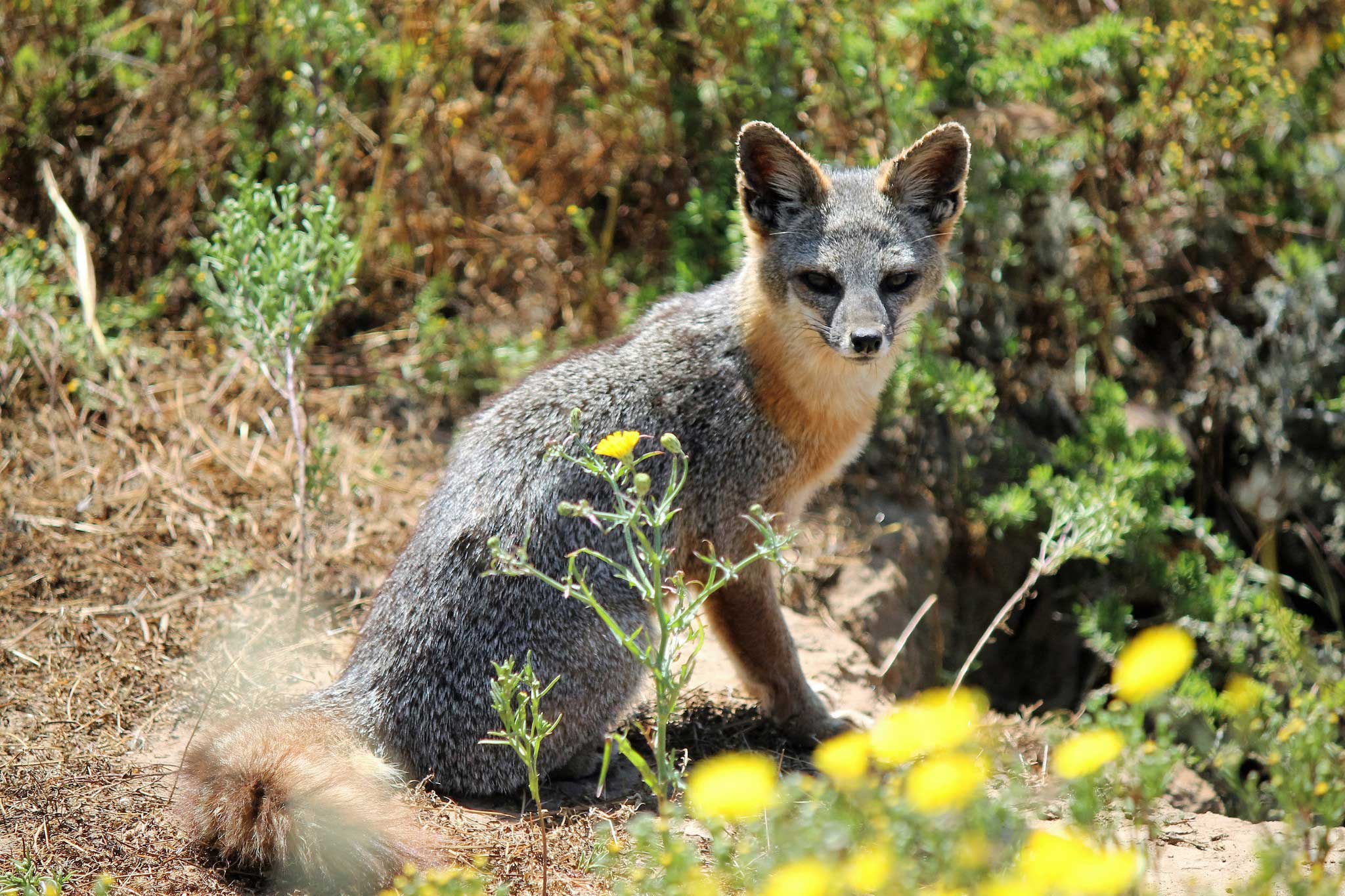
San Clemente Island fox (Urocyon littoralis clementae, 2017. Photo by roxanchicalo (iNaturalist, Creative Commons Attribution-NonCommerical 4.0 International license).
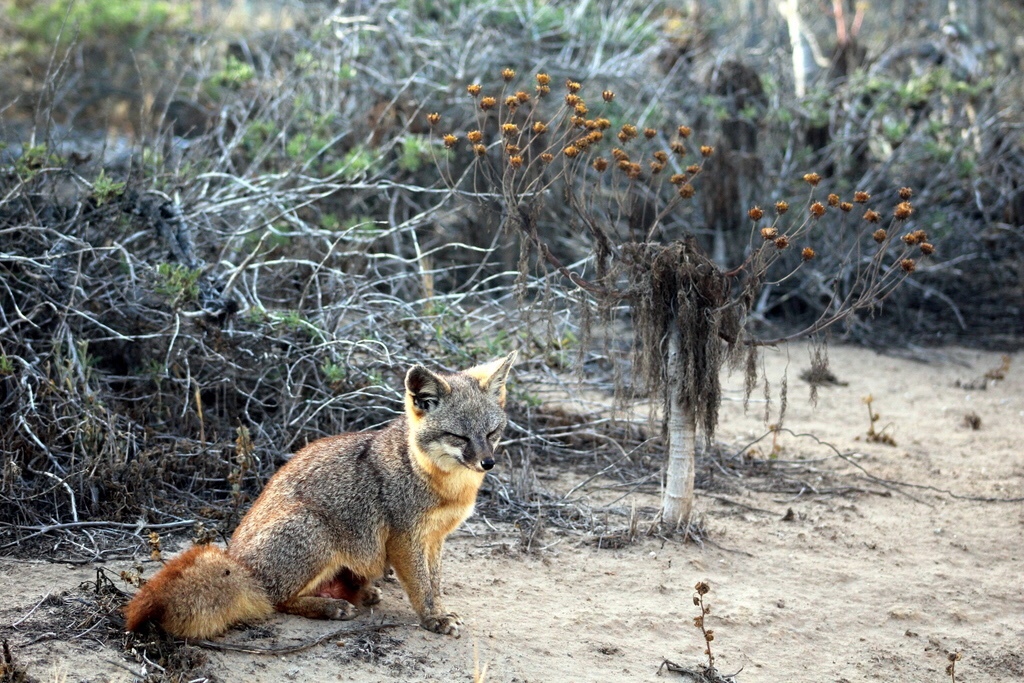
A San Nicolas Island fox (Urocyon littoralis dickeyi), 2016. Photo by Jeremiah (iNaturalist, Creative Commons Attribution-NonCommercial 4.0 International license).
What is the status of the Channel Islands fox recovery?
The Channel Island fox recovery programs have been a success. The San Miguel, Santa Cruz, and Santa Rosa island foxes were removed from the US endangered and threatened species list in 2016. The Santa Catalina Island fox was downgraded from federally endangered to threatened. The foxes on San Clemente and San Nicolas islands were never on the US endangered and threatened species list. All Channel Island foxes, including the species and all of its subspecies, remain on the state threatened species list in California.
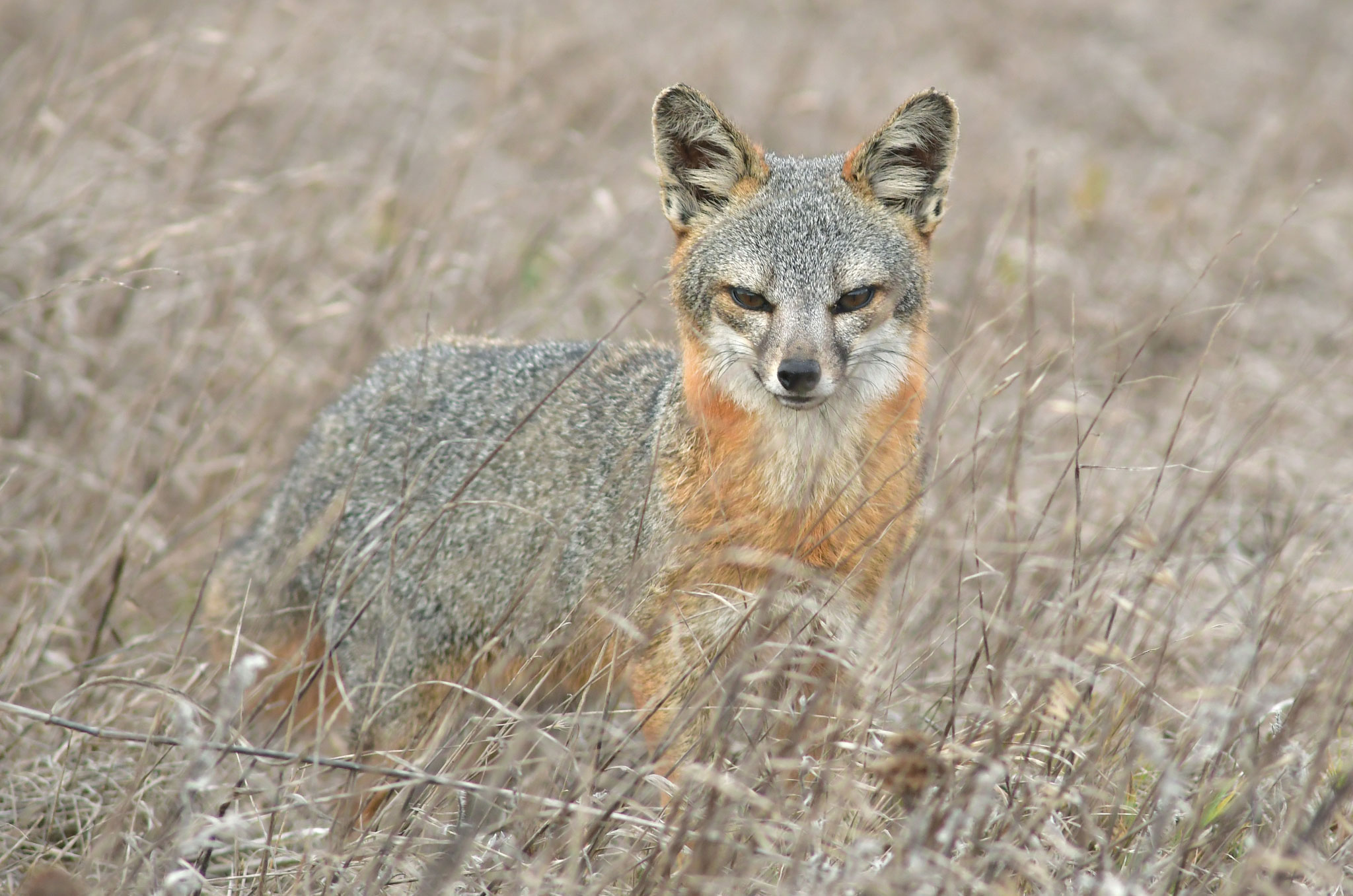
San Miguel Island fox (Urocyon littoralis littoralis), 2021. Photo by Christian Schwarz (iNaturalist, Creative Commons Attribution-NonCommercial 4.0 International license).
Due to the success of the recovery efforts, the captive breeding programs for the Channel Islands foxes have been disbanded. A vaccine program continues in which some wild Channel Islands foxes are captured and vaccinated against both rabies and distemper each year to prevent these diseases from threatening the fox populations. Rules are also in place to keep diseases that may infect wildlife from being brought to the islands. Pets are not allowed in Channel Islands National Park. The Catalina Island Conservancy has strict rules for bringing pets onto its properties, including vaccination policies. Access to San Nicolas and San Clemente islands is strictly controlled by the US Navy.
Challenges remain, however. One of these is that each subspecies of Channel Islands fox has a very small range and, as a result, a naturally small population size, from hundreds of foxes to more than one thousand foxes per island. This means that the populations of these foxes are always fragile, even when healthy. The other is that the foxes have little natural resistance to diseases like distemper that could decimate their populations, so continued vaccination efforts and monitoring are necessary.
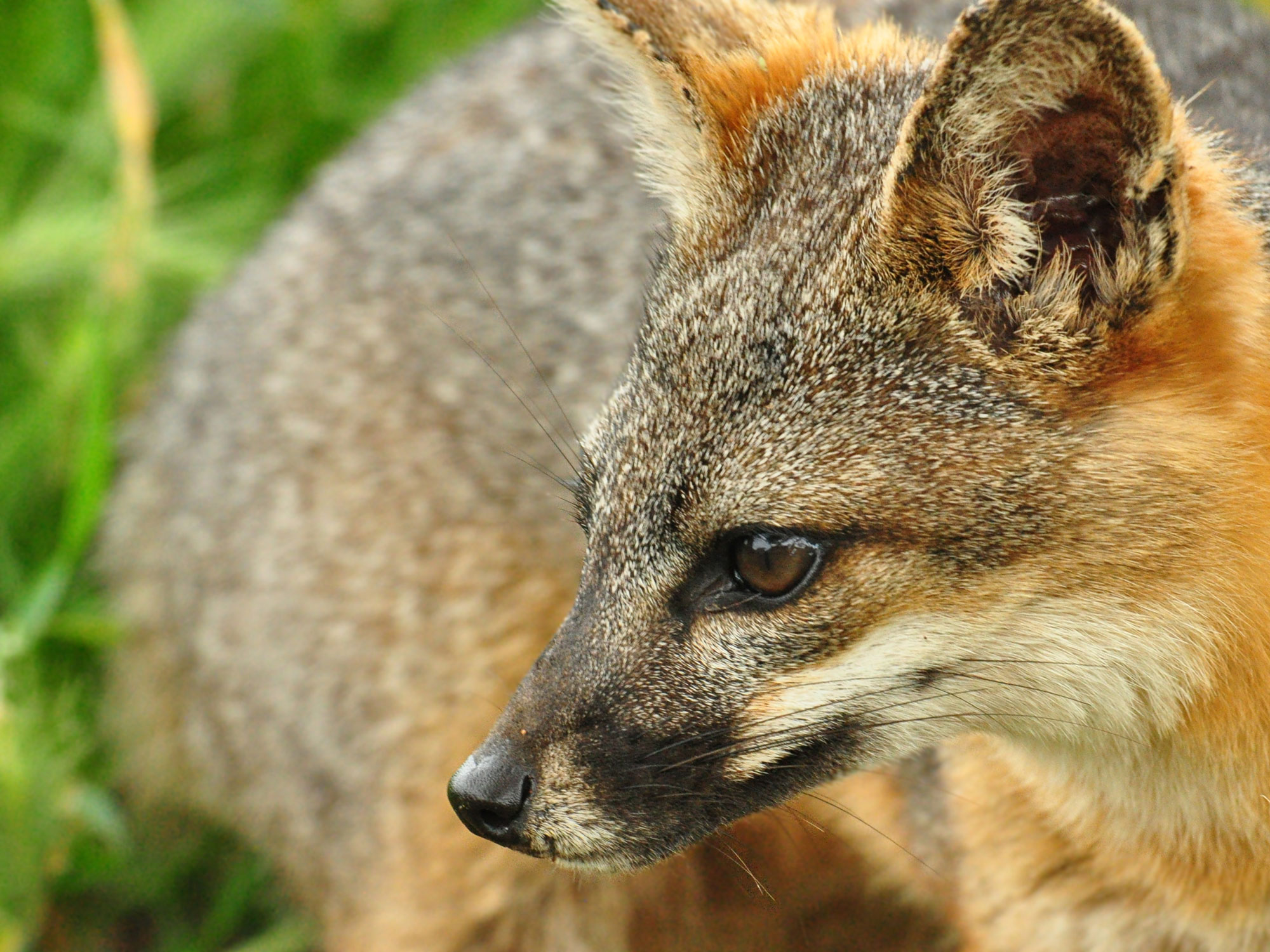
Santa Cruz Island fox (Urocyon littoralis santacruzae), 2017. Photo by Shanthanu Bhardwaj (flickr, Creative Commons Attribution-ShareAlike 2.0 Generic license, image resized).
How are institutions in Albuquerque helping the Channel Islands fox?
The Museum of Southwestern Biology houses a collection of Channel Island fox specimens from San Nicolas Island that were collected between 2016 and 2020. These samples can be used for research on the Channel Islands fox.
Resources
Web resources
Canine distemper (Cornell Wildlife Health Lab): https://cwhl.vet.cornell.edu/disease/canine-distemper
Catalina Island Conservancy: https://catalinaconservancy.org/
Foxes on Catalina Island: the ultimate come-back story (Orange County Coastkeeper): https://www.coastkeeper.org/foxes-on-catalina-island-the-ultimate-come-back-story/
Island fox (Channel Islands National Park California): https://www.nps.gov/chis/learn/nature/island-fox.htm
IUCN Red List of Threatened Species: https://www.iucnredlist.org/
National security and the loggerhead strike (Living on Earth, 20 September 2002): https://www.loe.org/shows/segments.html?programID=02-P13-00038&segmentID=3
The decline of the island fox (Channel Islands National Park California): https://www.nps.gov/chis/learn/nature/fox-decline.htm
Articles
Sahagún, L., and A. Hubbard. 2015. Catalina Island fox gains numbers. Greatest danger now? People. Los Angeles Times, 12 March 2015. https://www.latimes.com/science/sciencenow/la-sci-sn-channel-islands-fox-20150312-story.html
Schoch, D. 1999. Lessons in the tale of the fox and the shrike. Los Angeles Times, 17 May 1999. https://www.latimes.com/archives/la-xpm-1999-may-17-mn-38058-story.html
Scientific articles
Roemer, G.W., and R.K. Wayne. 2003. Conservation in conflict: the tale of two endangered species. Conservation Biology 17: 1251-1260.
Roemer, G.W., C.J. Donlan, F. Courchamp. 2001. Golden eagles, feral pigs, and insular carnivores: How exotic species turn native predators into prey. Proceedings of the National Academy of Sciences, USA 99: 791-796. https://doi.org/10.1073/pnas.012422499