


Page snapshot: An overview of the Socorro dove, including what it is, why it is imperiled, what it is being done to help it recover.
Topics covered on this page: What is the Socorro dove and why is it imperiled?; What is being done to conserve the Socorro dove?; How are institutions in Albuquerque helping the Socorro dove?; Resources.
Credits: Funded by the National Science Foundation. Any opinions, findings, and conclusions or recommendations expressed in this material are those of the author(s) and do not necessarily reflect the views of the National Science Foundation. Page by Elizabeth J. Hermsen (2024).
Updates: Page last updated May 1, 2024.
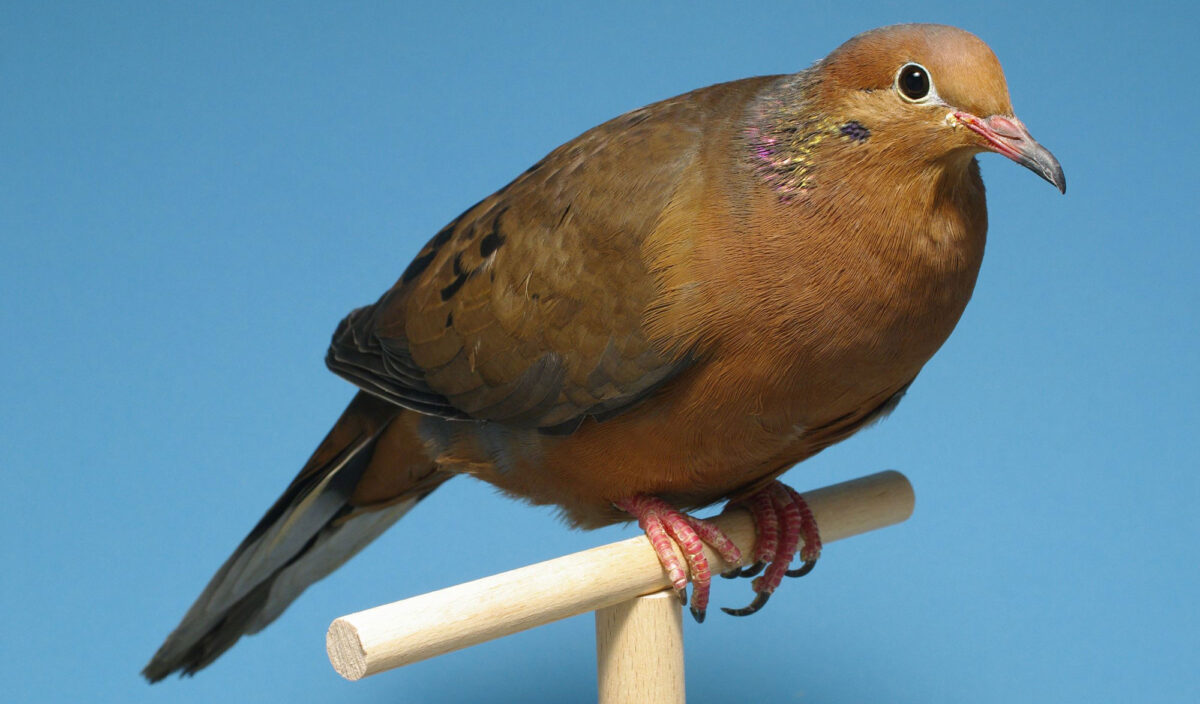
Image above: A Socorro dove at the German championship of the German Canary and Bird Breeders Association. Photo by Johann Alexi (Wikimedia Commons, Creative Commons Attribution-ShareAlike 4.0 International license, image cropped and resized).
What is the Socorro dove and why is it imperiled?
The Socorro dove (also known as Grayson's dove, Zenaida graysoni) is a bird native to Socorro Island, a volcanic island in the Revillagigedo Archipelago, a group of islands in the Pacific Ocean off the western coast of Mexico. The dove was driven to extinction in the wild in 1970s, during construction of an airstrip and other infrastructure for the Mexican Navy. Predation by domestic cats and habitat destruction caused by grazing sheep also contributed to the extinction of the dove on Socorro Island.
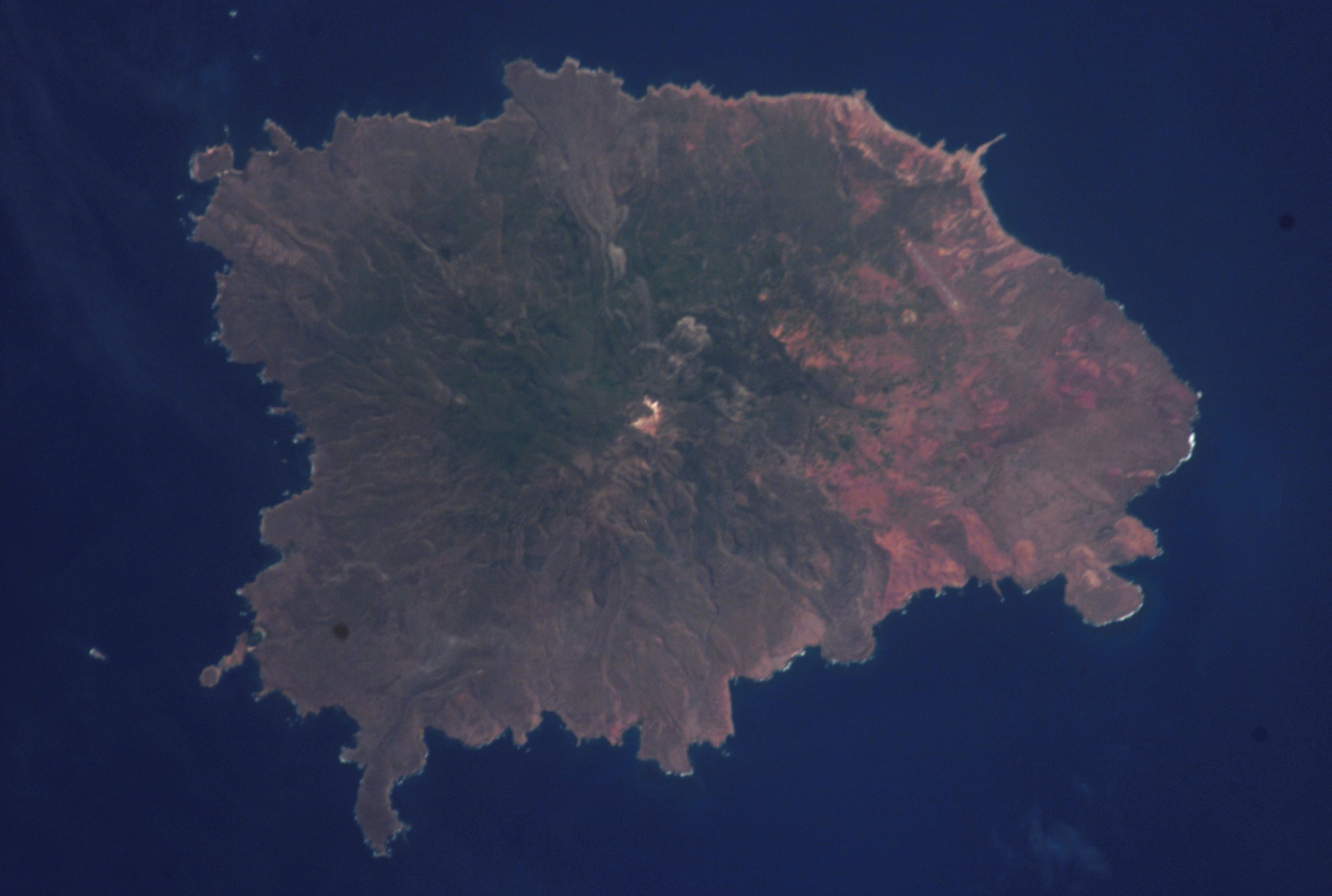
Satellite image of Socorro Island. The airstrip can be seen on the upper right side of the island (actually the southeastern side of the island). Satellite image by NASA (Wikimedia Commons, public domain).
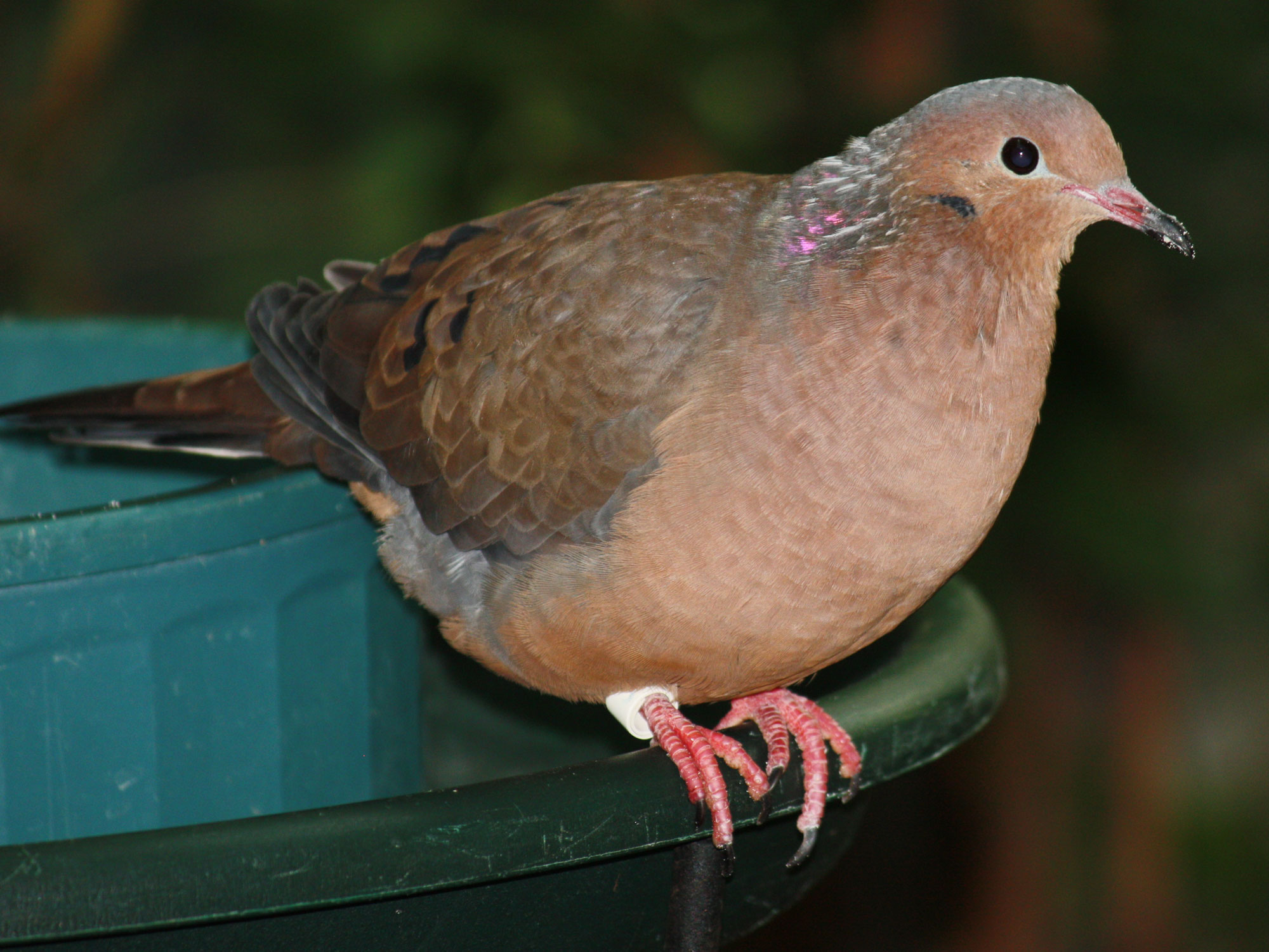
A Socorro dove at the Louisville Zoo, Louisville, Kentucky, USA. Photo by Ltshears (Wikimedia Commons, Creative Commons Attribution-ShareAlike 3.0 Unported license, image resized).
What is being done to conserve the Socorro dove?
Luckily, although the Socorro dove has gone extinct in the wild, people had been raising and breeding Socorro doves in the United States and Europe since the 1920s, when some of the doves were captured and brought to California. Unfortunately, the Socorro doves in the United States had interbred with closely related mourning doves (Zenaida macroura), which are widespread in North America. Thus, Socorro doves from Europe were used to establish a captive breeding program in the 1990s with the goal of reintroducing the doves to Socorro Island. The European program was later expanded to partners in the United States and, finally, Mexico. In the meantime, efforts have been undertaken in Mexico to improve the habitat for the doves on Socorro Island, including removing feral sheep and cats.
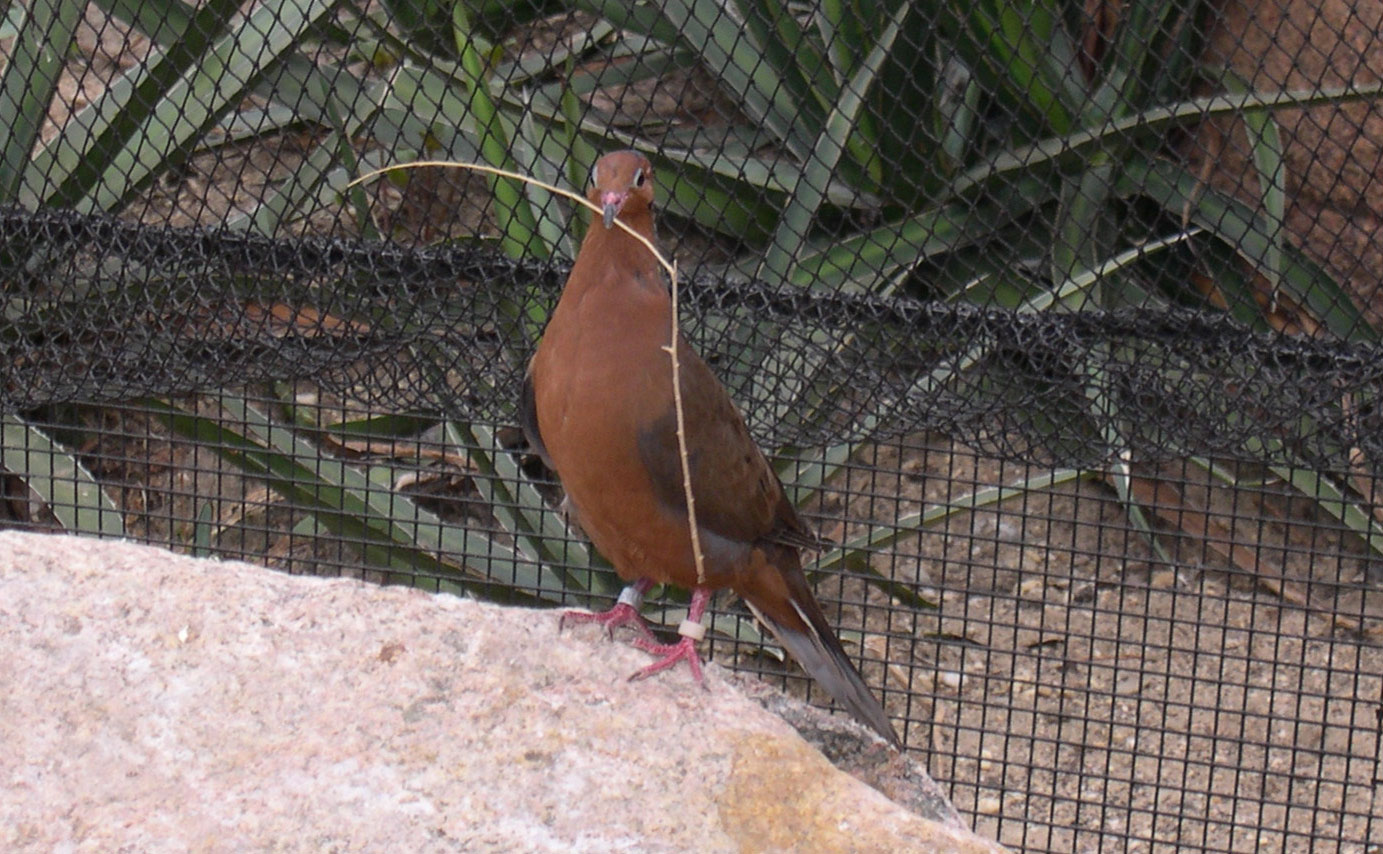
A Socorro dove in Burgers Zoo, Arnhem, The Netherlands. Photo by Magalhães (Wikimedia Commons, Creative Commons Attribution-ShareAlike 2.5 Generic license, image cropped).
How are institutions in Albuquerque helping the Socorro dove?
In 2008, 12 Socorro doves were transferred to Albuquerque BioPark, the first U.S. zoo to become part of the captive breeding and reintroduction effort. In 2013, Albuquerque BioPark sent the first Socorro doves to a zoo in Mexico. The Museum of Southwest Biology houses some specimens of the Socorro dove from Albuquerque BioPark in its collections.
Resources
Web resources
Socorro dove returns to Mexico for first time in over 40 years (American Bird Conservancy): https://abcbirds.org/news/socorro-dove-returns-to-mexico-for-first-time-in-over-40-years/
Articles and reports
Soorae, P.S. (ed.) 2010. Global re-introduction perspectives: 2010. Additional case-studies from around the globe. IUCN.
Scientific articles and book chapters
Ortiz-Alcaraz, A., A. Aguirre-Muñoz, F. Méndez-Sánchez, E. Rojas-Mayoral, F. Solis-Carolos, B. Rojas-Mayoral, E. Benavides-Ríos, S. Hall, H. Nevins, and A. Ortega-Rubio. 2019. Ecological restoration of Socorro Island, Revillagigedo Archipelago, Mexico: the eradication of feral sheep and cats. Pp. 267-273 in C.R. Veitch, M.N. Clout, A.R. Martin, J.C. Russell, and C.J. West (eds.), Island invasives: scaling up to meet the challenge. Occasional Paper SSC no. 62. IUCN, Gland, Switzerland.